

Architecture & Design Firms
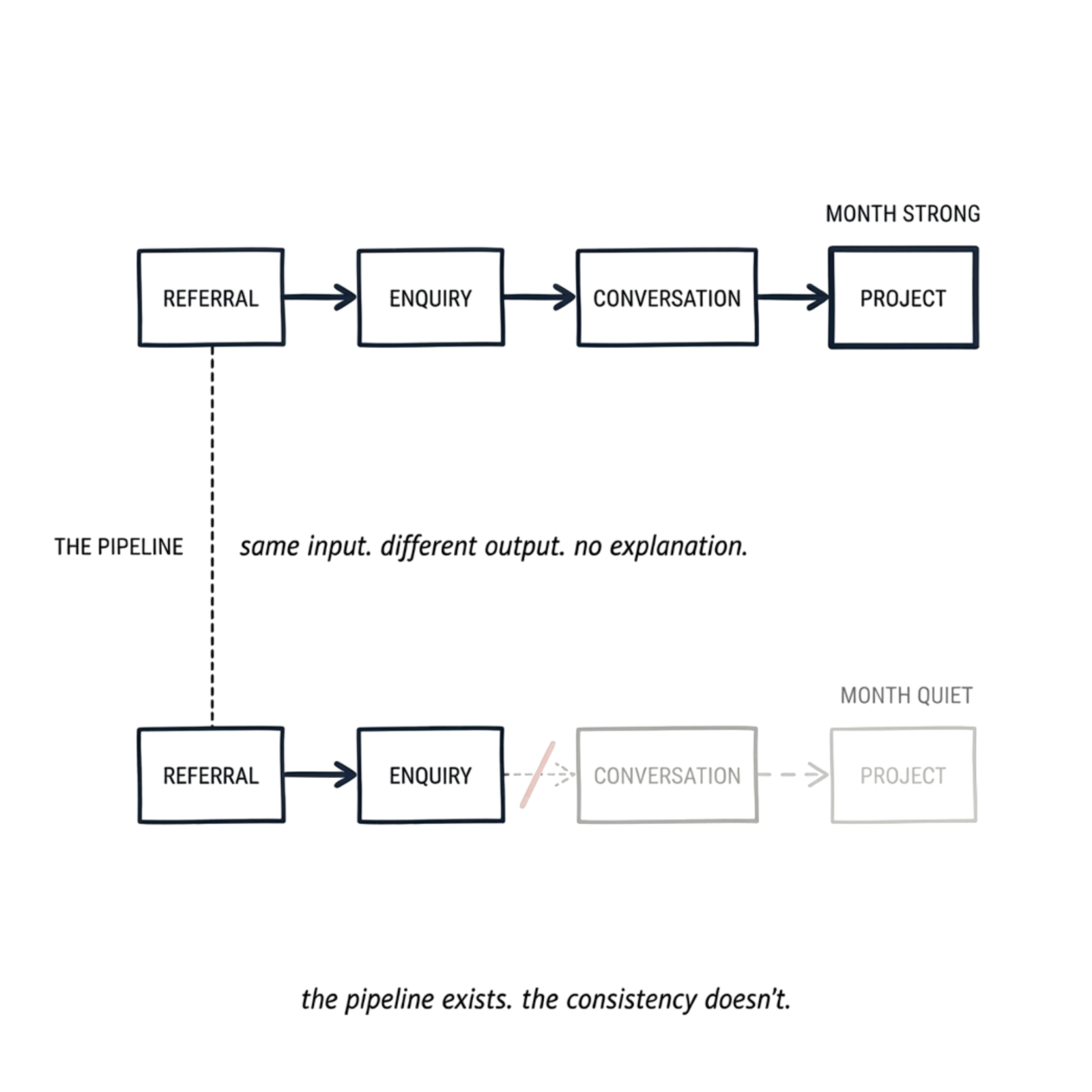
Referrals bring clients, but not consistently.
Your work is strong, the projects are coming in but the pipeline moves on its own schedule — strong one month, quiet the next — and you cannot fully explain why. The right clients are finding you, yet most are deciding before you ever hear from them.
The Misdiagnosed Problem
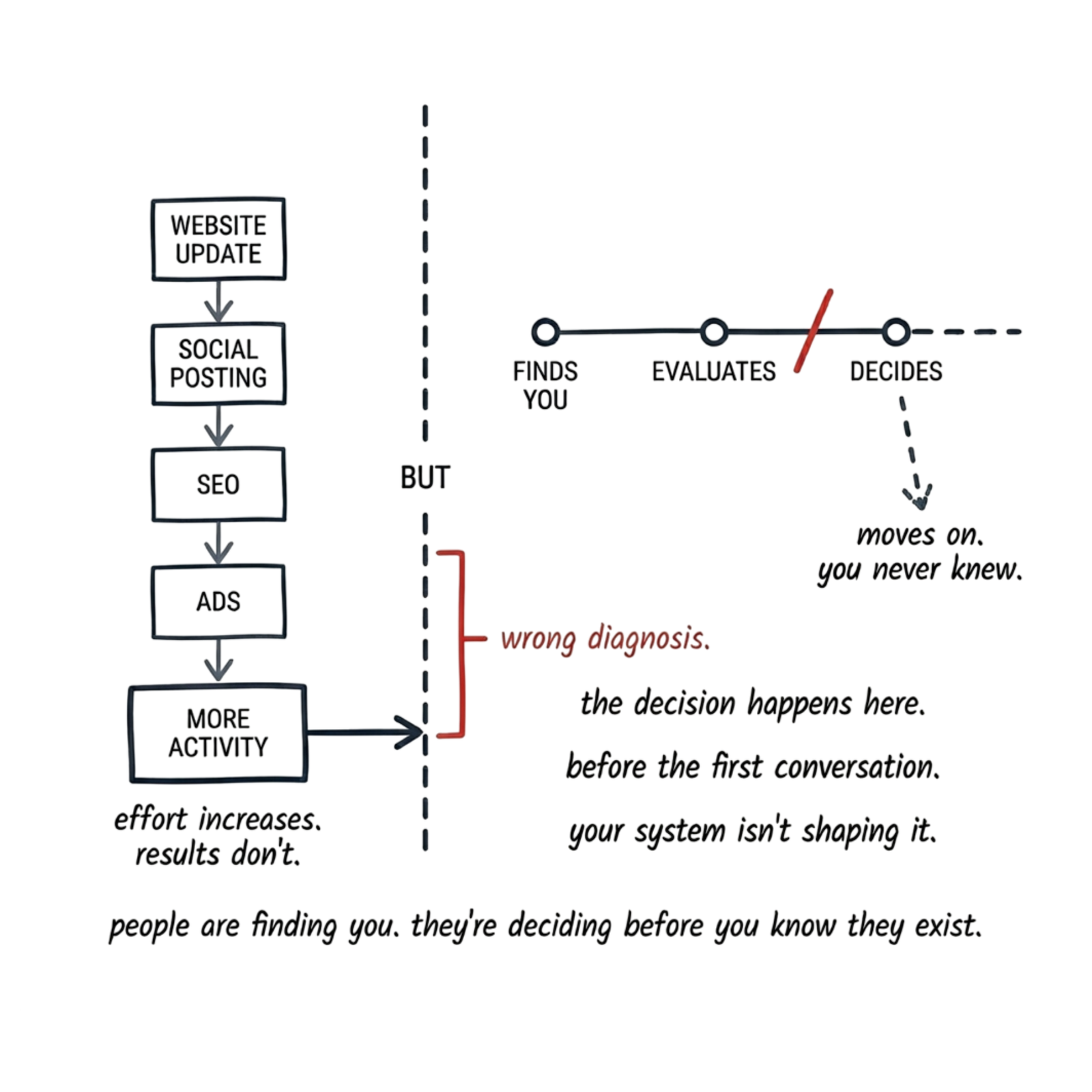
Most firms think the problem is visibility.
So they do what feels logical: update the website, post more on Instagram, try SEO, run ads. The activity increases but the results do not, the leads vary in quality but conversations start with basic questions that take time to answer. Some prospects disappear after an initial exchange, others focus on price before they understand what they’re actually buying.
The real problem is not that people are not finding you. It is that people are finding you — and deciding against you — even before you know they exist. Your system shows your work but does not help clients decide.
Why Growth Stays Tied to Your Time
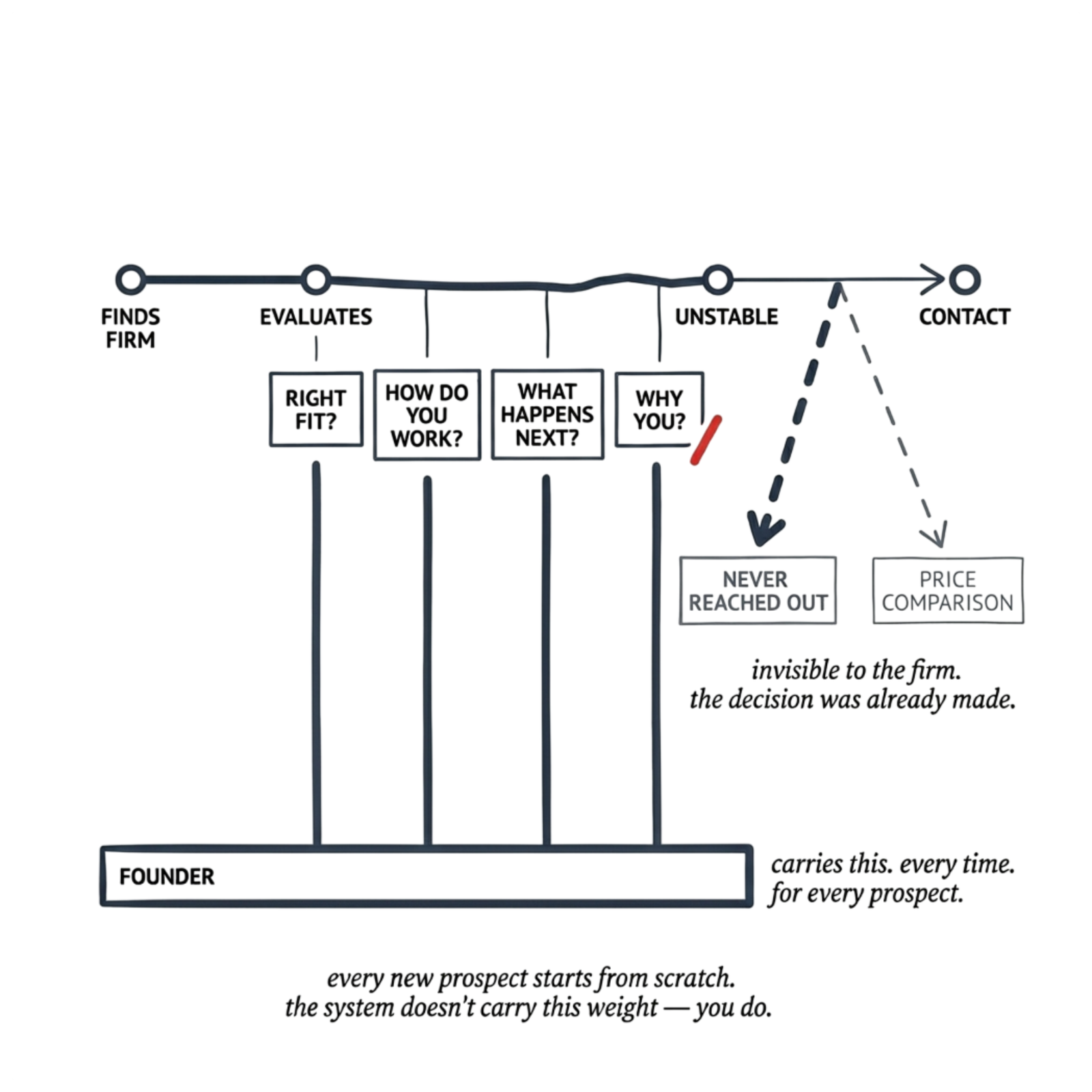
Every serious enquiry still needs your involvement to move forward — every new prospect starts from scratch — your system does not carry any of that weight, you do.
A client visits your site — the work is good, the projects are real, but questions remain unanswered. Are you right for their type of project? How do you work? What happens after they reach out? Why choose your firm over another with equally strong work?
When those questions are not answered early, three things happen. Some clients never reach out; while some do, but stay uncertain and slow the process down. Some treat it like a price comparison and leave.
This part is invisible to most firms. Decisions happen before the first conversation — and the current setup is not shaping those decisions. That is why growth stays tied to your time.
How the System Should Behave
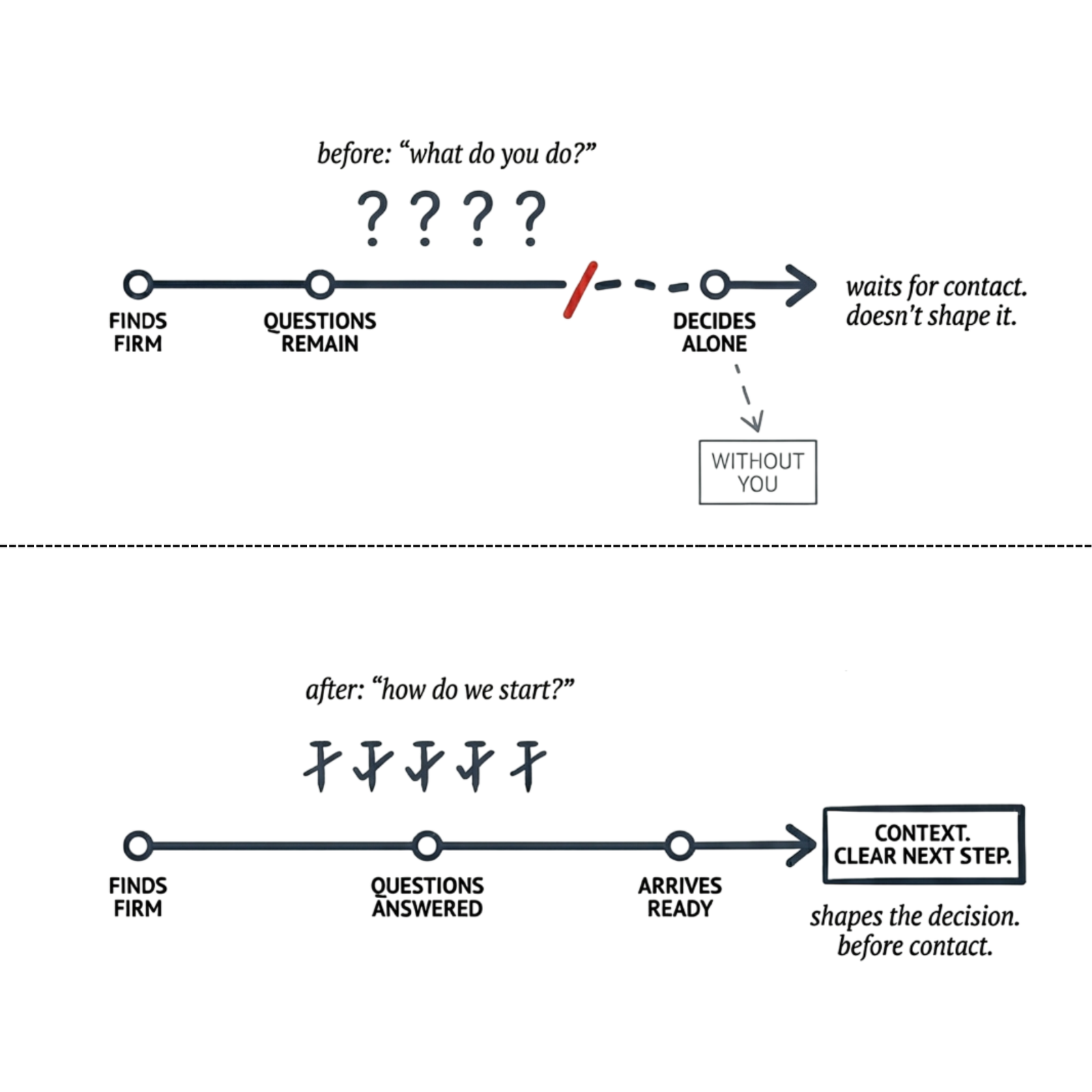
A well-built system does not wait for a conversation — it shapes the decision before one starts.
It makes clear who the firm serves and who it does not — through how the work and approach are presented, not through a statement on the about page.
It answers the questions clients typically bring to the first call: the process, the involvement level, the types of projects taken on, and what moving forward actually involves.
It creates a clear next step, so a serious prospect knows exactly what happens when they decide to proceed.
For an architecture firm, this means the portfolio is doing more than showing finished projects. It is communicating project type, scale, client profile, and process — so a serious buyer can self-qualify before they reach out.
When that is in place, the enquiries change, clients do not arrive to explore. They arrive with context. They do not ask, “What do you do?”, they ask, “How do we start?”
This reduces explanation time, filters out poor-fit enquiries, and means serious conversations start from a shared understanding — not from scratch.
More activity without this structure just adds noise — it can feel like progress, but it does not improve results.
The problem is not effort, it is that what is being done is not helping clients decide. Until that changes, more work produces the same uneven pattern.
What Changes When the System Works
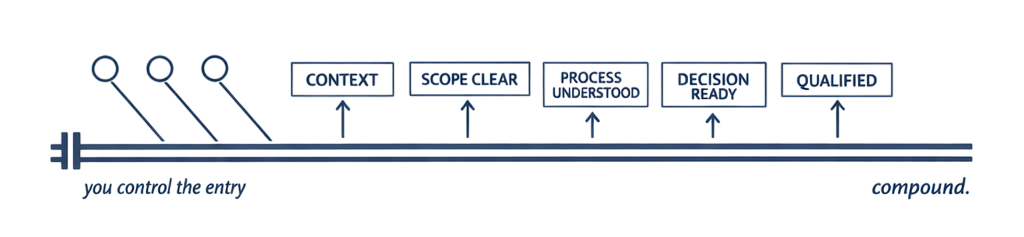
The pressure eases, enquiries become more consistent — more precise.
Fewer conversations start from scratch. Less time is spent on basics. More discussions happen with shared understanding of what is involved and what it costs. Clients who reach out are closer to a decision. They understand the scope, they respect the process, and they do not reduce the choice to price.
The pipeline becomes less dependent on referral timing. The right clients find the firm through a system that is running — not through a conversation that happened to come at the right moment.
The Next Step
The questions worth answering before any structural work begins are specific ones.
Where do enquiries come from? What does a prospect see and experience before they reach out? Where does clarity break down — and the decision gets made against you? Why do some leads convert and others do not?
A Strategic Diagnosis answers these questions against your actual setup — not a template. You get a clear view of what is working, what is not, and what to fix first. If the system is sound, that is what you will be told. If there are structural gaps, they will be named precisely — with the order in which to address them. No generic recommendations.