
Industrial & Manufacturing Firms
The capability is built — the right buyers are not seeing it.
Your plant is running, all certifications are in place, you can handle serious volume but most new business still comes from old relationships. That works but it just does not scale, and you do not control it.
Meanwhile, globally are shortlisting suppliers without speaking to them. Many never reach out, not because you cannot supply but because they cannot verify that you can.
How buyers actually evaluate suppliers
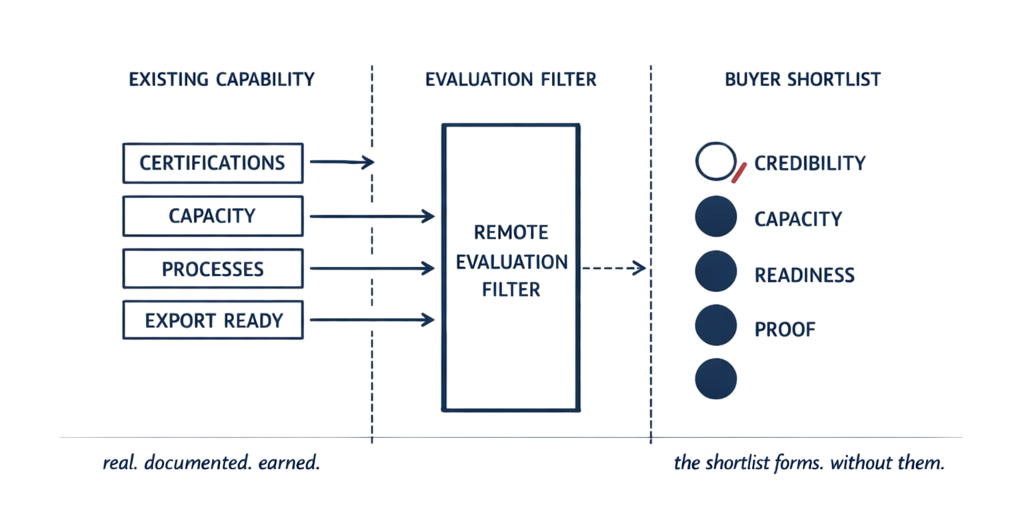
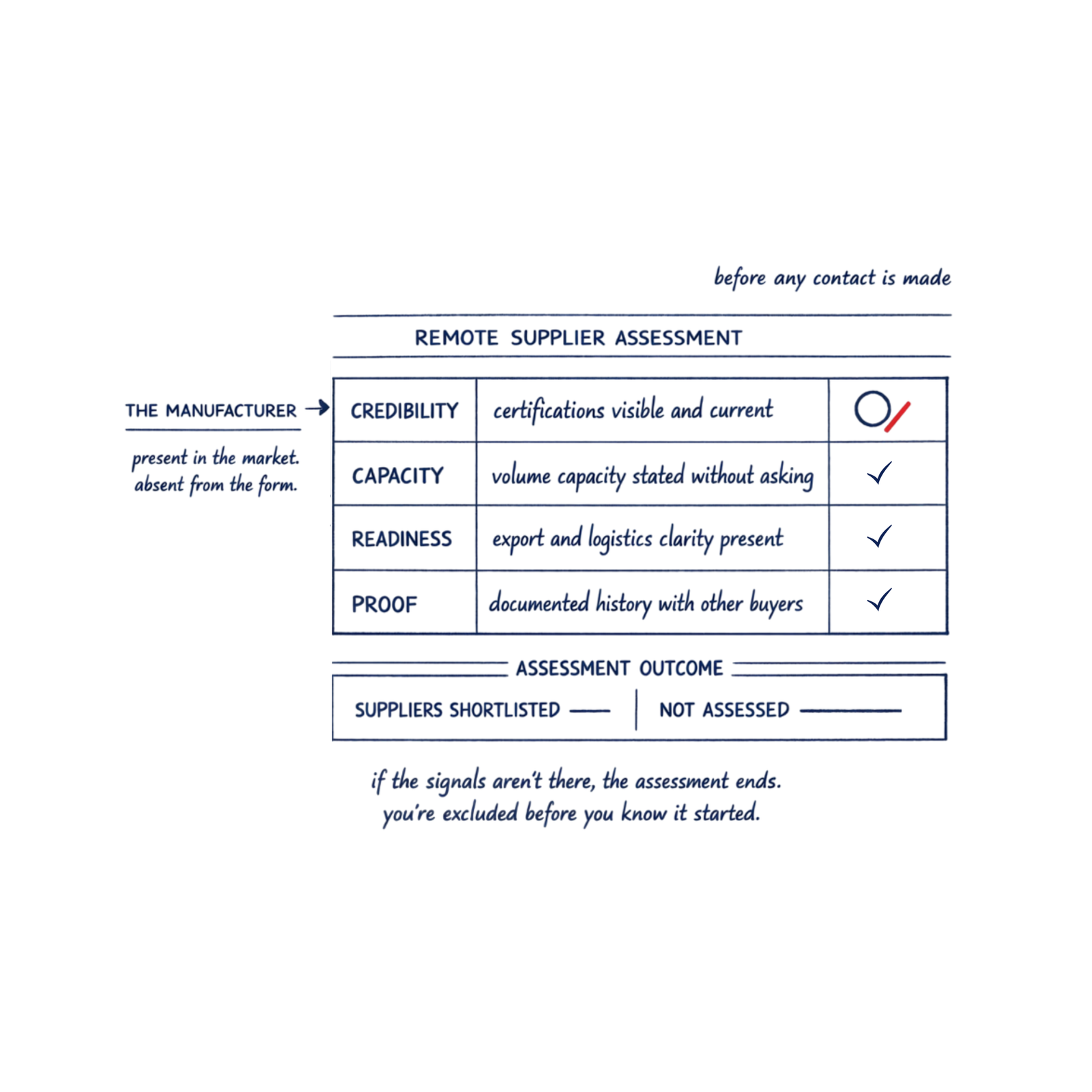
Procurement teams do not explore, they filter and eliminate. Before any call, they build a shortlist using only what they can confirm online — no explanations, no back-and-forth.
They look for four things:
- Credibility — certifications clearly visible, or assumed absent
- Capacity — ability to handle volume, without needing to ask
- Readiness — export and logistics clarity reduces risk
- Proof — documented history, not claims
If those signals are unclear or invisible, you are excluded early — often without knowing or hearing from them again.
What is actually breaking
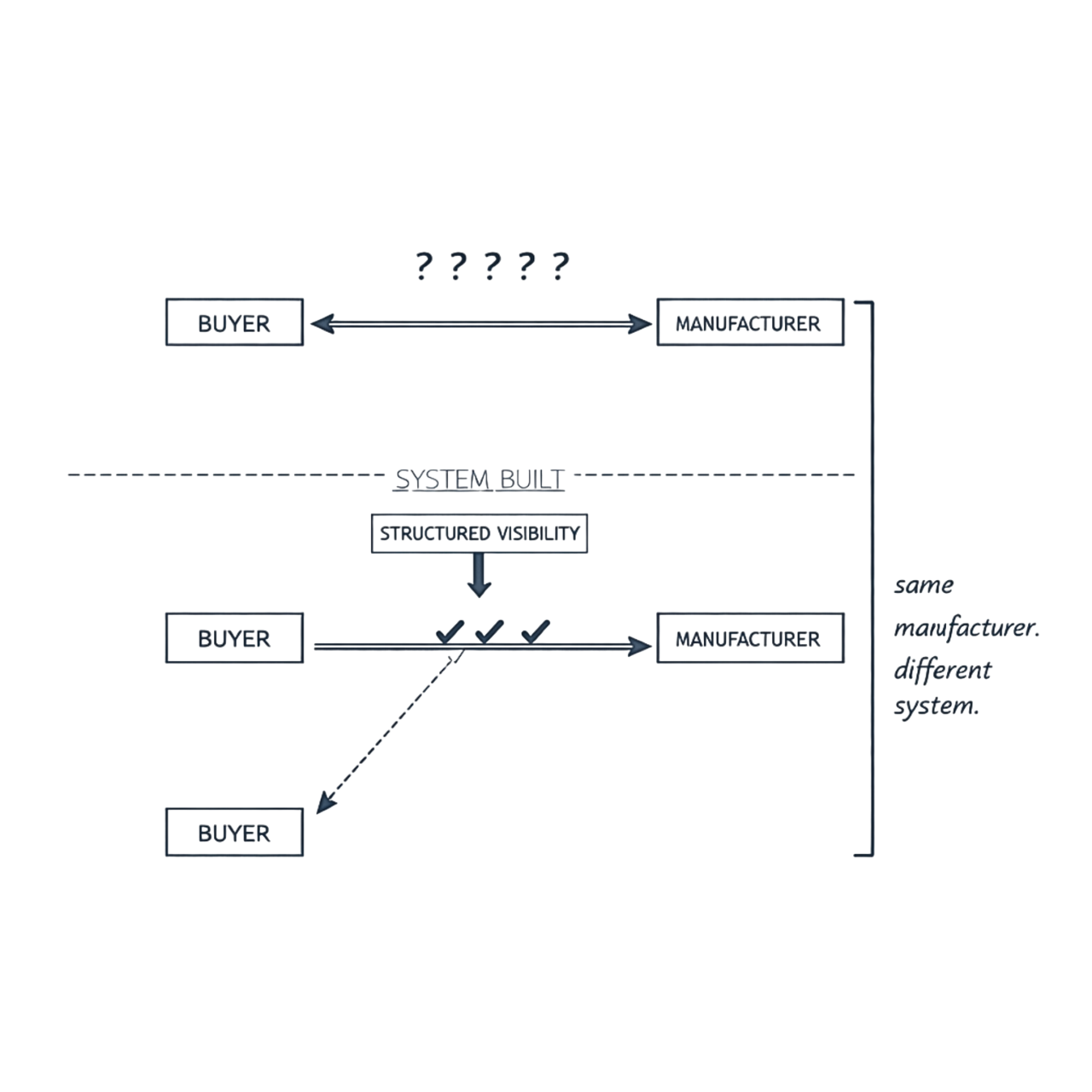
The technical depth is there, the problem is that buyers cannot see it.
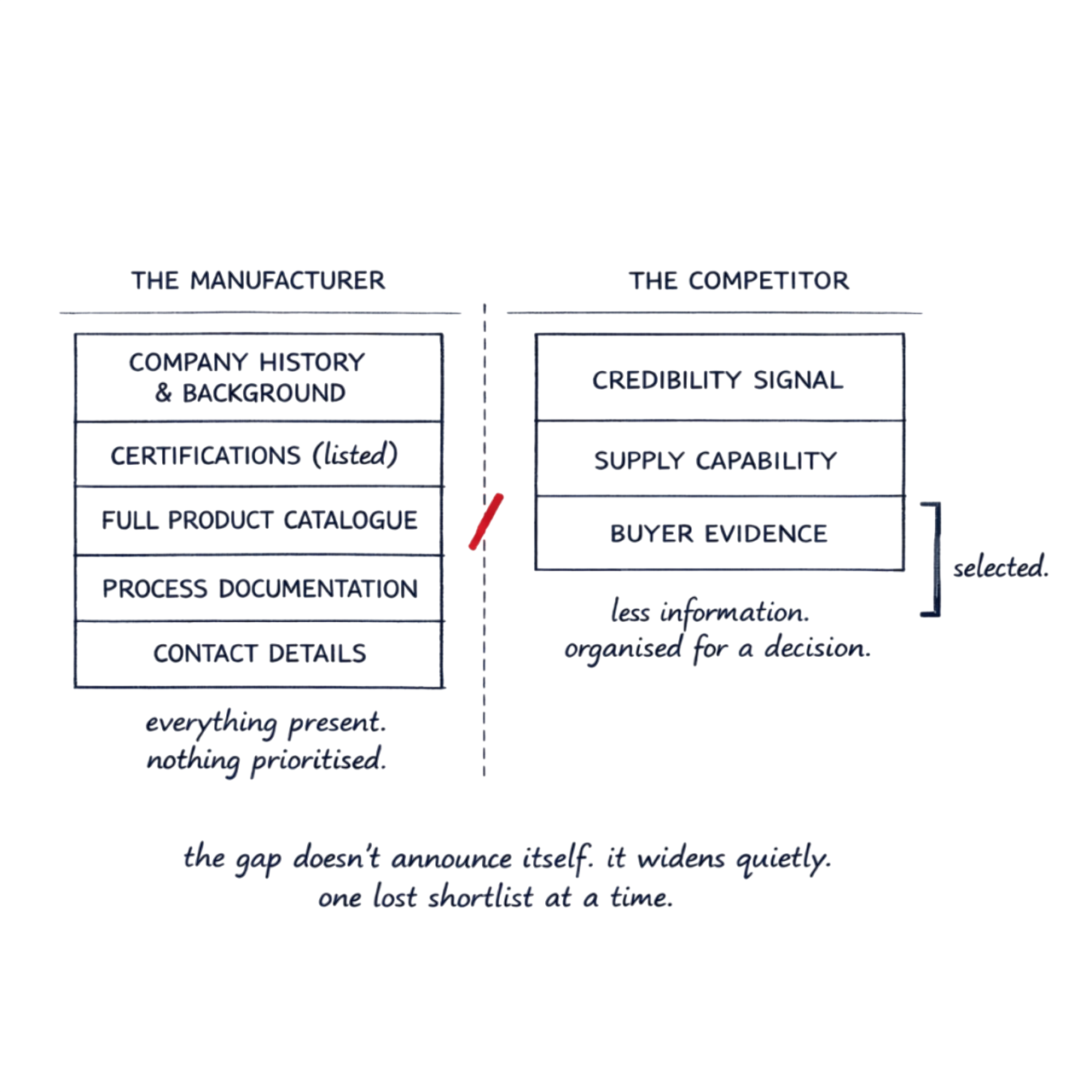
This pattern appears consistently: strong operational capability, poorly communicated externally. The website describes the company rather than helping a buyer make a decision. Certifications are listed somewhere but not presented in a way that removes doubt. A complex product range is shown without a clear hierarchy — buyers cannot quickly see where you are strongest.
So the evaluation becomes hard and buyers move to the next option. Less capable suppliers win, not because they are better, but because they are easier to understand and trust without a call.
That gap does not announce itself. It widens quietly, one missed shortlist at a time.
This is not a lead or a sales problem, It is how your capability is being seen and understood and more marketing will not fix this.
The objective is not more traffic. It is qualification — making it possible for the right buyer to find you, assess you, and decide to contact you without a conversation first.
What the system needs to do
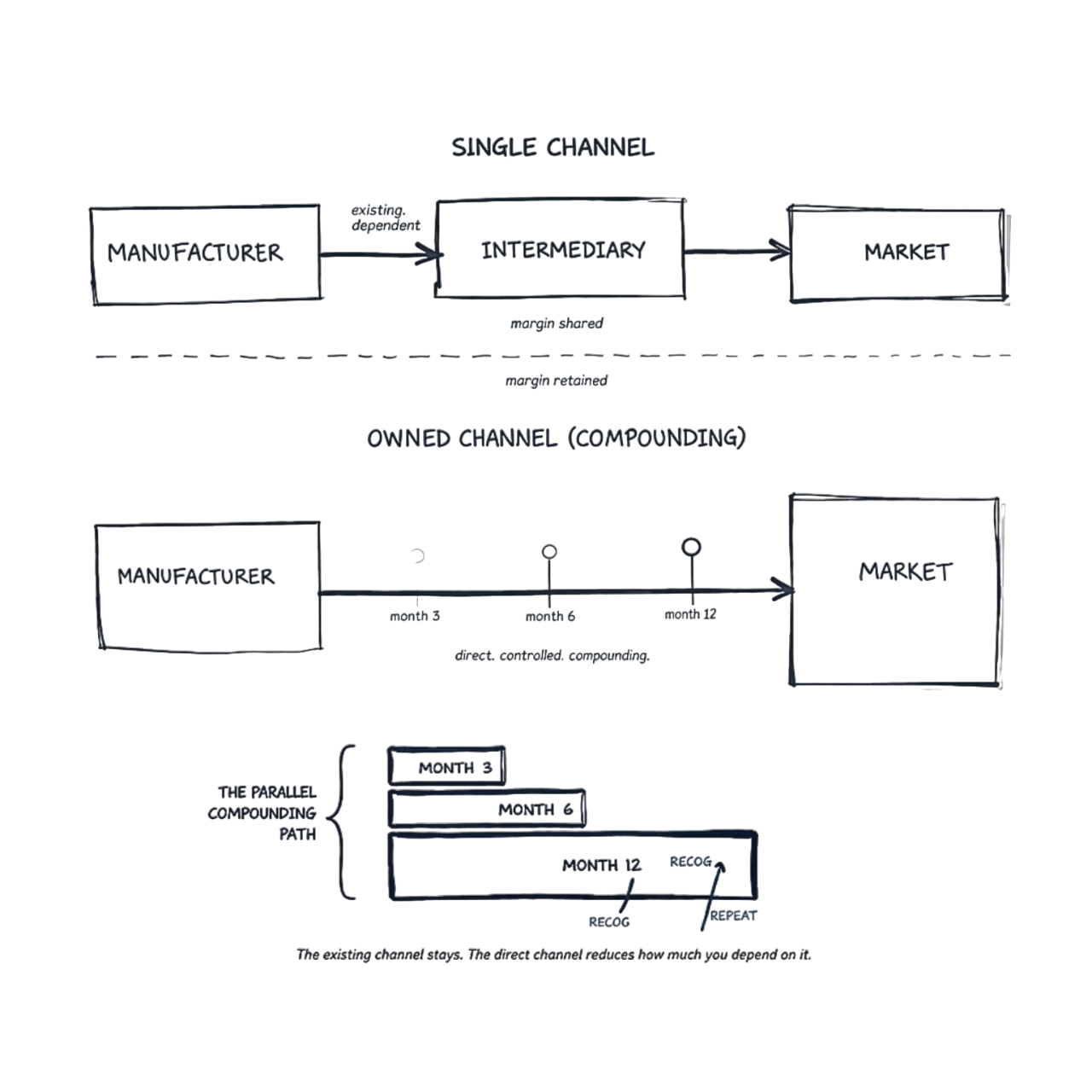
A well-structured system works the way procurement teams think — not the way marketing agencies do. Your capability becomes discoverable, understandable without explanation, and credible before the first conversation.
Enquiries arrive already qualified and the first conversation is on terms and timeline — not about whether you can supply. Margins get stronger because fewer intermediaries are involved, and the system compounds — building credibility with each month it operates, making the next buyer faster to convert.
The Next Step
Before changing anything, identify where the break actually is.
A Strategic Diagnosis looks at your current setup and answers four questions: Which opportunities are being missed entirely? — Where are serious buyers finding you today? — What do they see when they evaluate you? — Where does trust break before contact?
You get a clear view of what is working, what is not, and what to fix first.
Not sure yet? Find your constraint — 7-min audit →
No obligation beyond the assessment. Sameer works directly on every engagement.