

7-Min Digital Authority Self-Audit
Your business may be better than your digital presence makes it appear.
How easily can your ideal buyers discover, understand, trust and choose you?
6 buyer-experience areas. 7 minutes. One useful signal.
Free — no obligation.
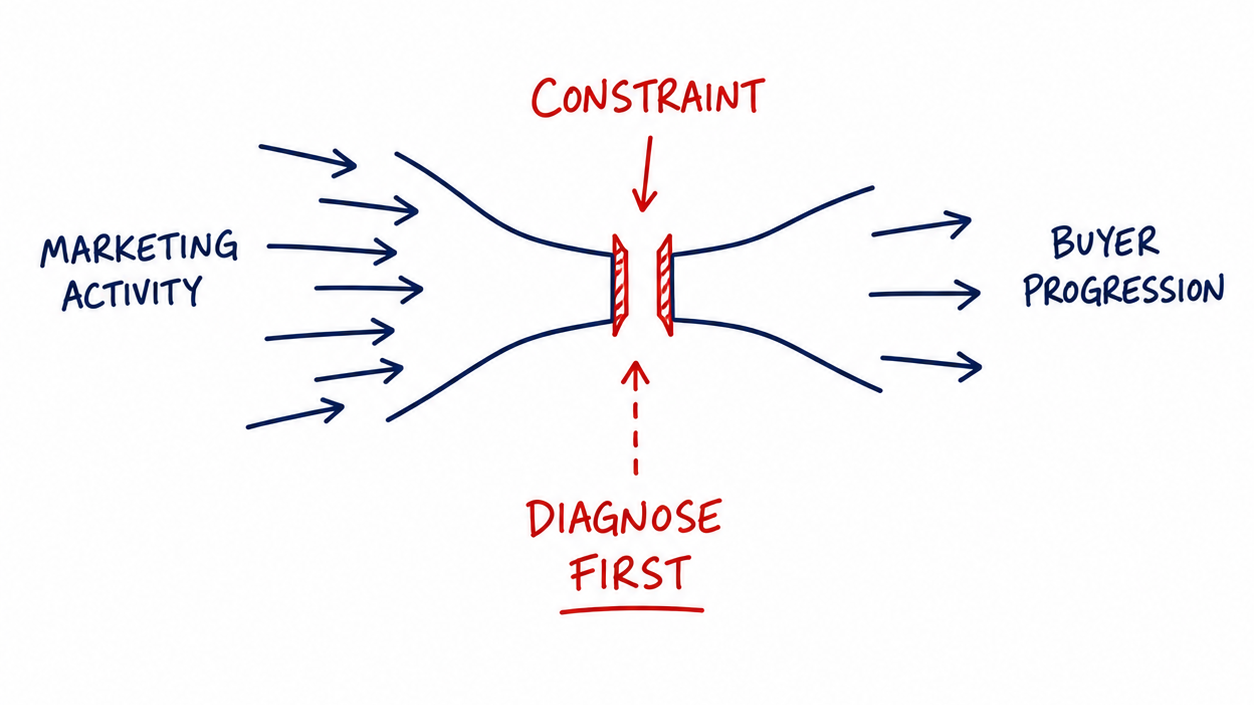
What you’ll discover
In about 7 minutes, evaluate six points where buyers may form an opinion about your business—from finding you to deciding whether to move forward.
You’ll see where your digital presence appears strong, where it may be creating friction, and whether something may be worth investigating further.
The 6 Areas
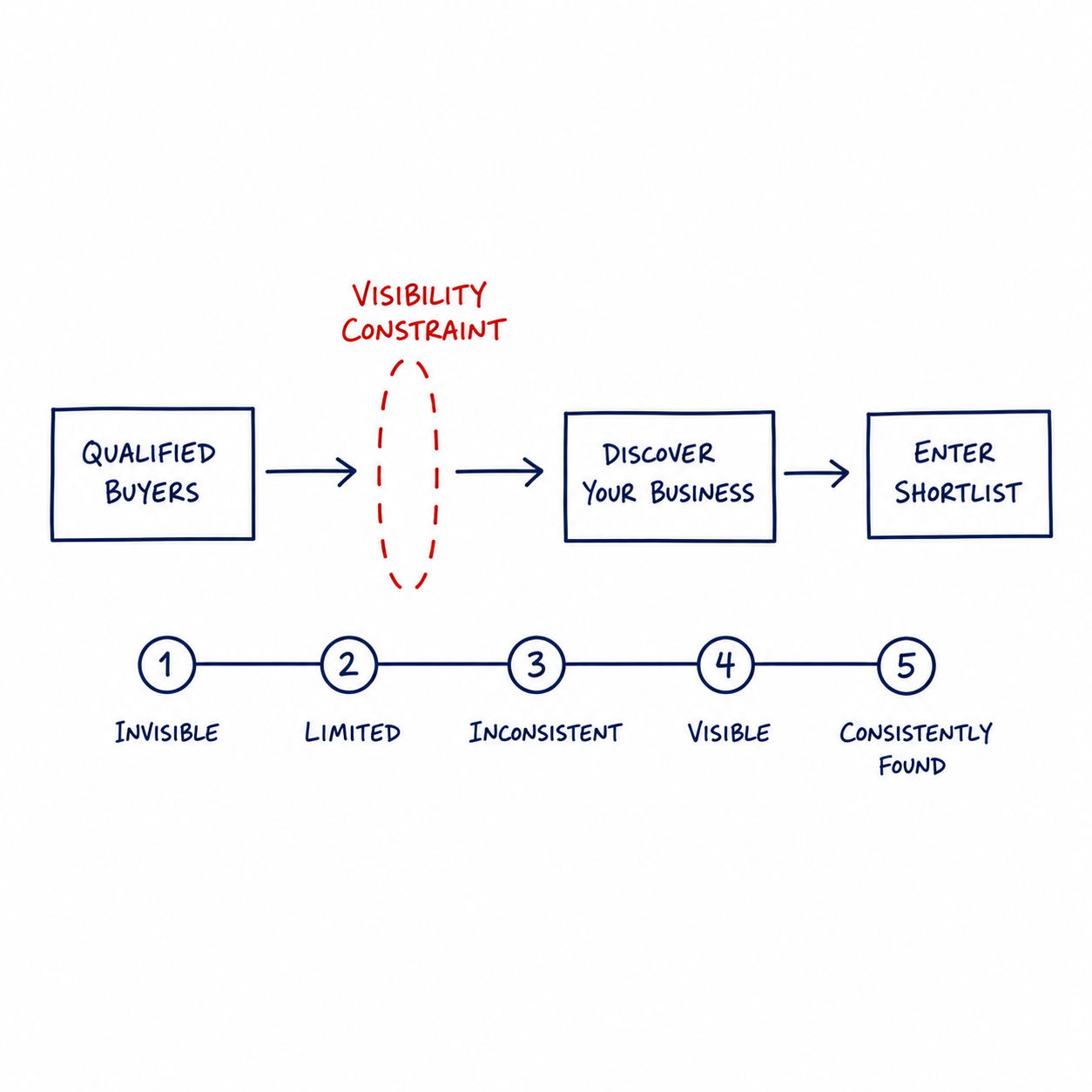
Can your ideal buyers find you when the need arises?
How easily does your business appear where your target buyers search, research and seek recommendations?
| 1 | 2 | 3 | 4 | 5 |
|---|---|---|---|---|
| Invisible | Limited | Inconsistent | Visible | Consistently Found |
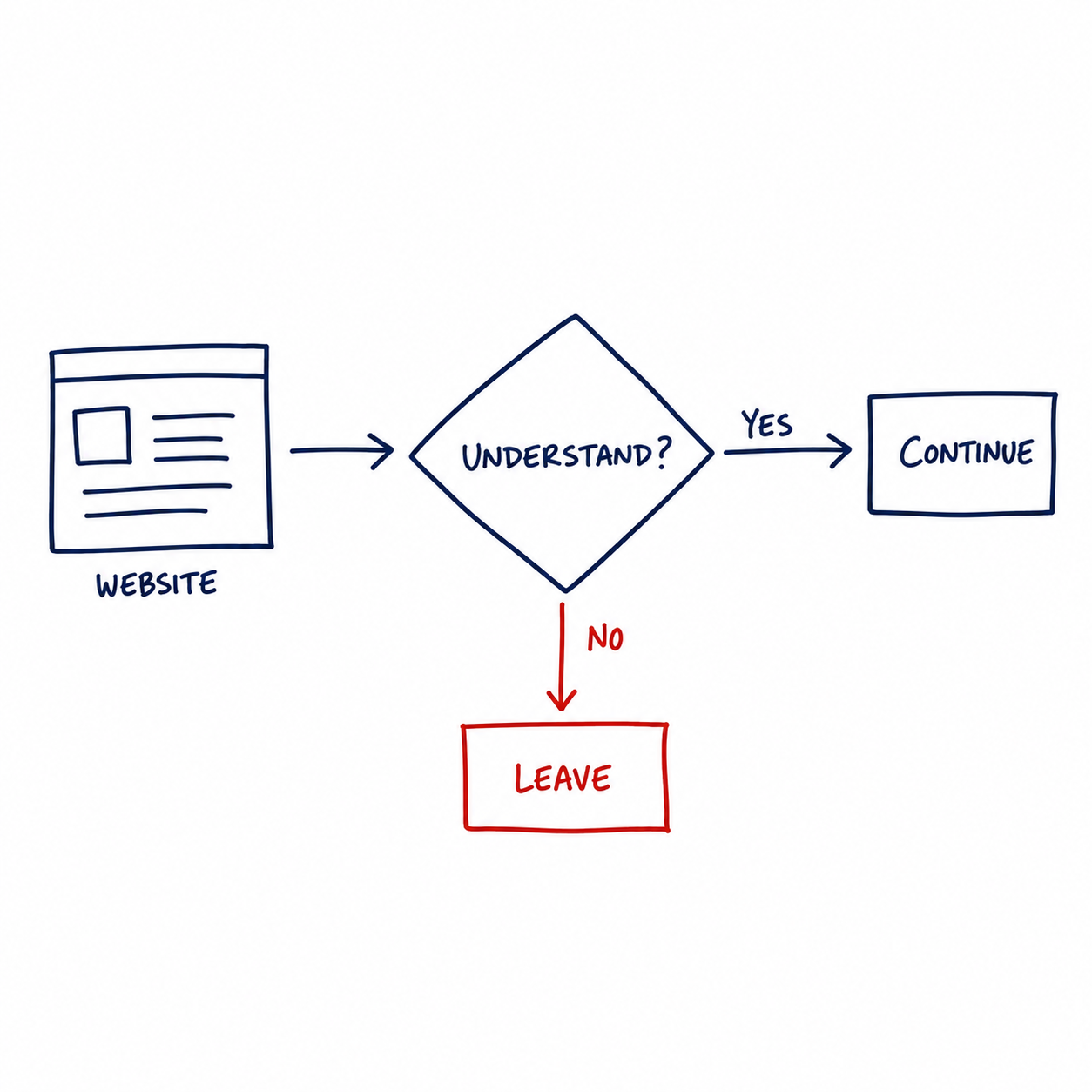
Do buyers quickly understand what you do, who you help and why you’re relevant?
How clearly does your digital presence explain your value and expertise?
| 1 | 2 | 3 | 4 | 5 |
|---|---|---|---|---|
| Confusing | Unclear | Partly Clear | Clear | Immediately Understood |
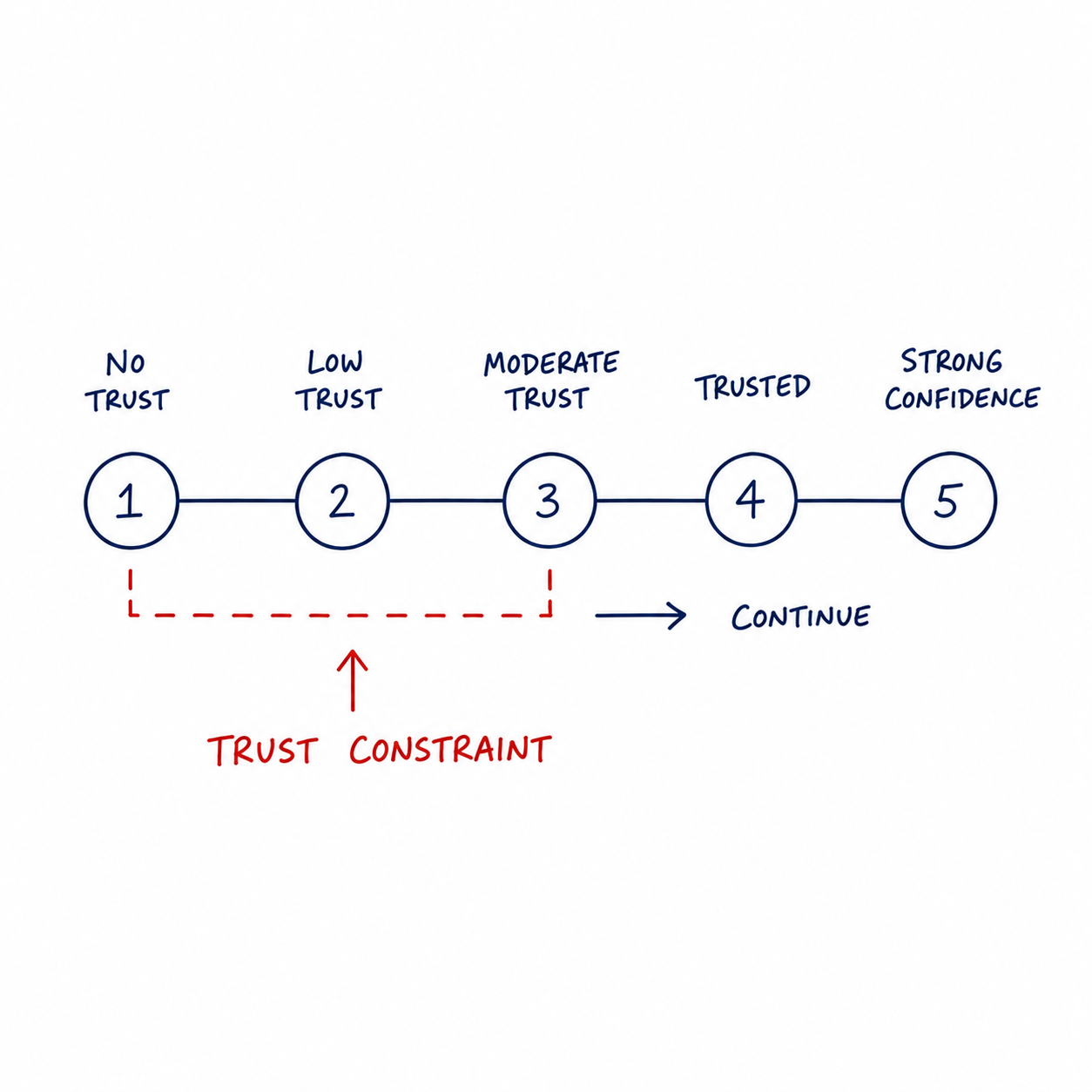
Do buyers have enough evidence to believe you?
How easily can buyers find proof of your experience, expertise, reputation and results before contacting you?
| 1 | 2 | 3 | 4 | 5 |
|---|---|---|---|---|
| No Confidence | Low Confidence | Moderate Confidence | High Confidence | Strong Confidence |
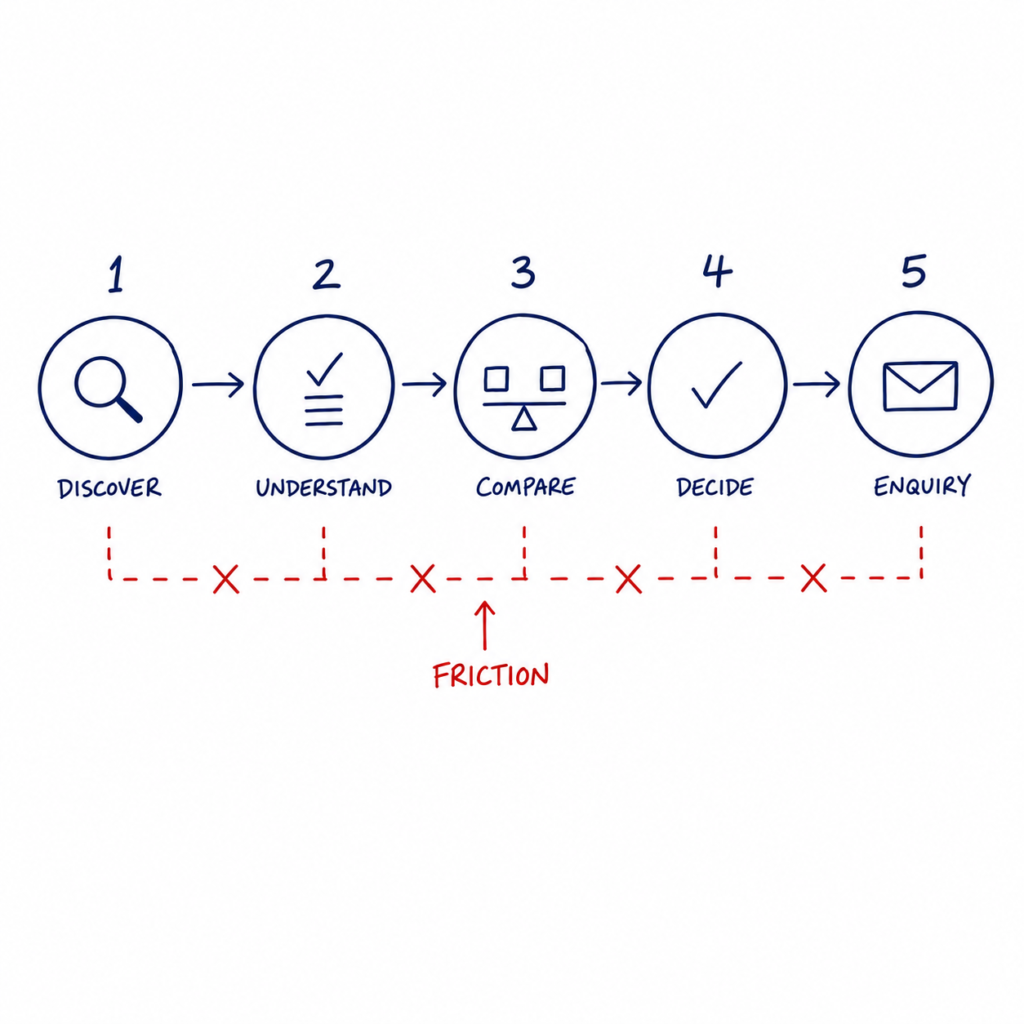
Do you make the buyer’s shortlist?
Does your digital presence make your business relevant enough to be seriously considered?
| 1 | 2 | 3 | 4 | 5 |
|---|---|---|---|---|
| Not Considered | Difficult to Evaluate | Partly Considered | Strong Candidate | Clearly Preferred |
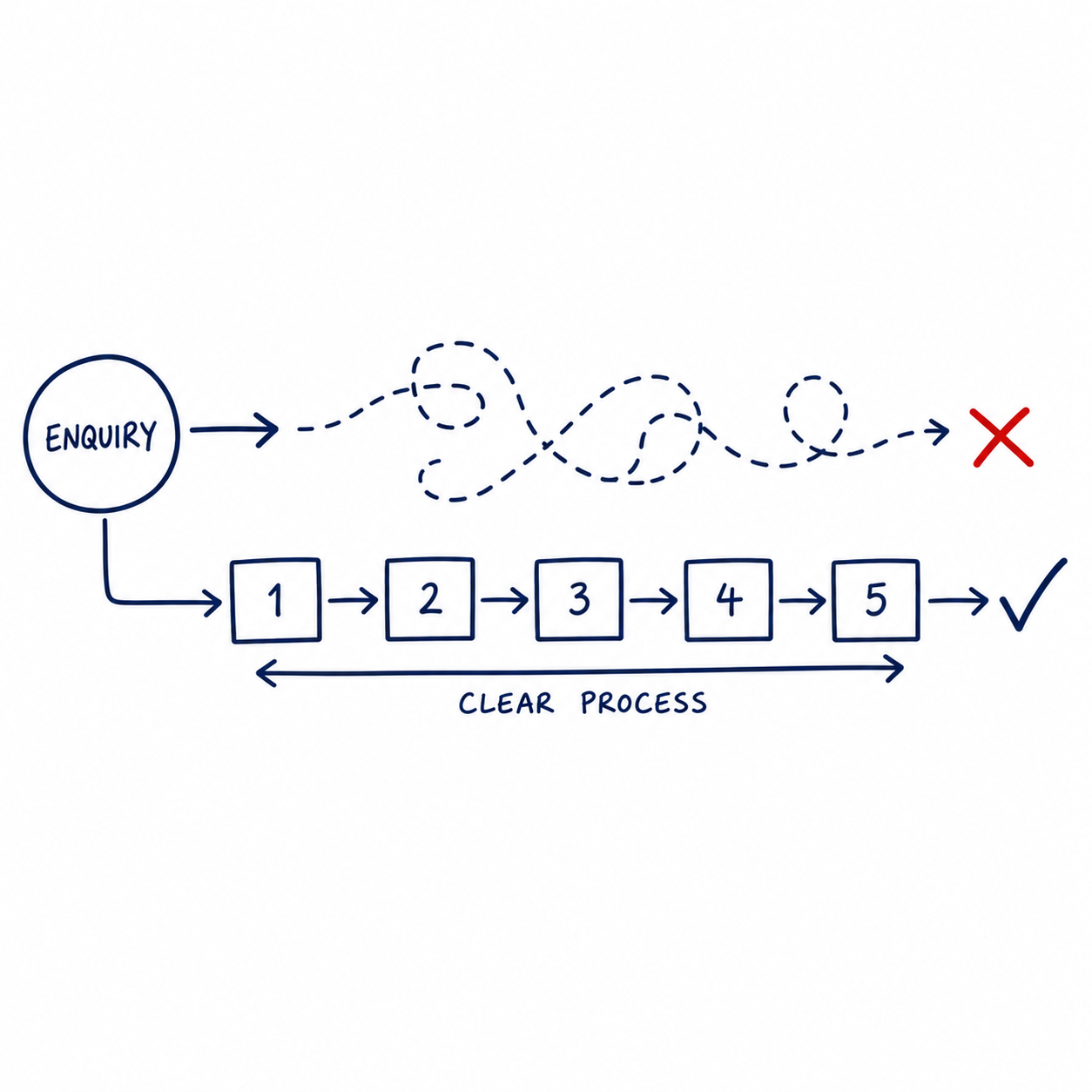
Do buyers have enough reason to choose you?
Does your digital presence clearly communicate your value, differentiation and proof—and make the next step clear?
| 1 | 2 | 3 | 4 | 5 |
|---|---|---|---|---|
| Blocked | Difficult | Uncertain | Clear | Confident |
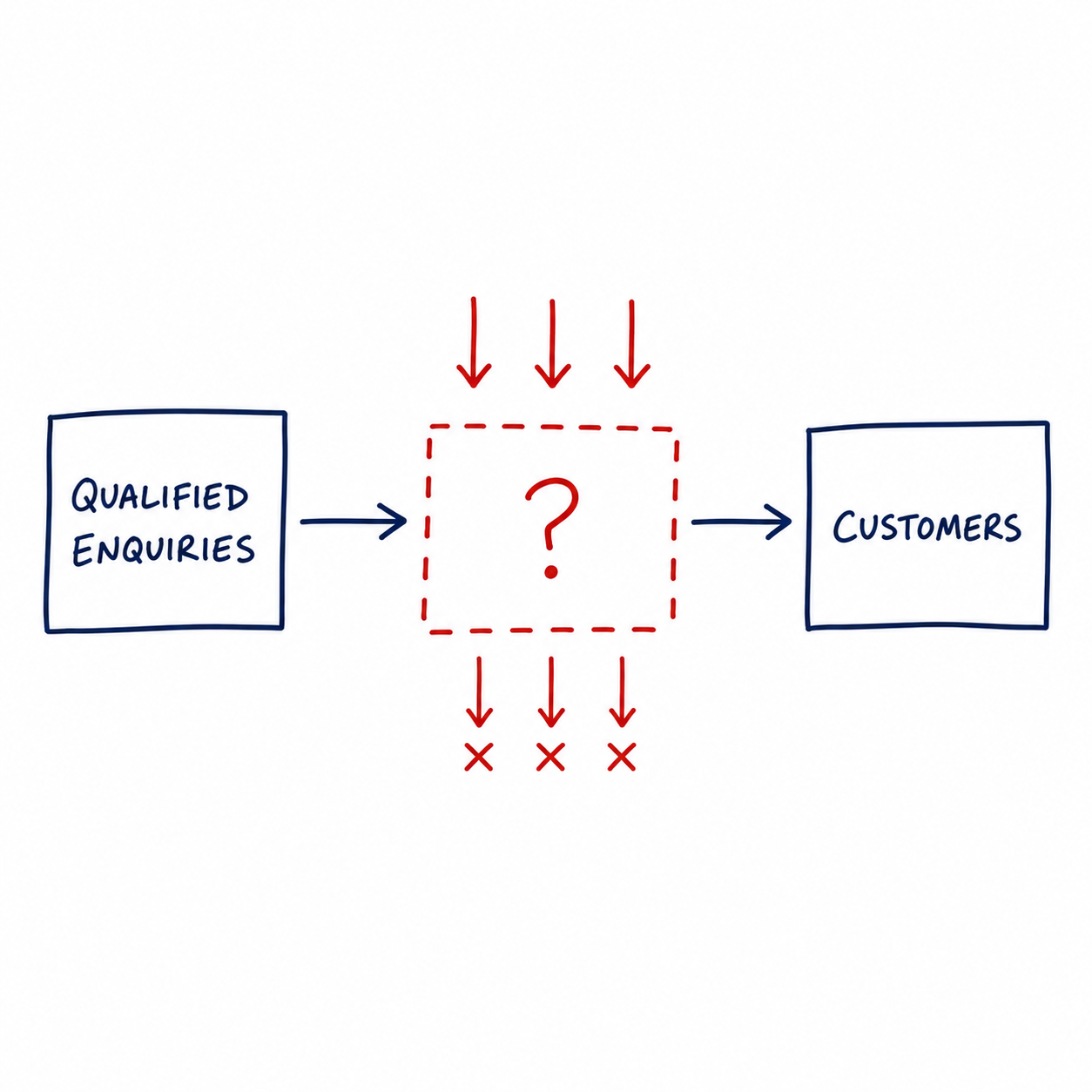
Is it easy for interested buyers to take the next step?
How clear and easy is the path from interest to enquiry, conversation, purchase or the next action?
| 1 | 2 | 3 | 4 | 5 |
|---|---|---|---|---|
| No Clear Path | Reactive | Basic | Structured | Consistent |
Before you begin. Answer based on how your target buyers are likely to experience your business—not how you see it internally. There are no right or wrong answers. Your score is a signal, not a diagnosis.
See Your Self-Audit Results
Enter your email to see where your digital presence may be helping—or limiting—your growth, and receive a no-obligation personalized assessment by Sameer.
Note: This isn’t a test of how good your business is. It looks at how easily your market may discover, understand, trust, consider and choose the expertise you already have—and where further improvement may be worthwhile. Results are indicative and may be subject to further review. By submitting your email, you agree to our Terms & Privacy Policy.