
The Marketing Cost Question Every Business Gets Wrong
What the Numbers Actually Mean for Your Business
Most businesses approach marketing cost the same way you approach a gym membership, asking: how much should I be paying? Then they find a benchmark in the local network, match it roughly, and assume the decision is made, but unfortunately it isn’t.
The benchmark tells you what others are spending, but it says nothing about what they’re getting. And it says nothing — absolutely nothing — about whether your spend is going into a system that can convert it, or a structure that will quietly absorb it. And this is the distinction that separates businesses that scale from businesses that stay busy.
The Number Everyone Cites — What It Actually Means.
The 2025 Gartner CMO Spend Survey1 puts average marketing spend at 7.7% of total company revenue. That number is referenced constantly, but it is rarely contextualized correctly in many business plans. So here is the context: 59% of the CMOs in that same survey say their budget is insufficient to execute their strategy. Read that again.
The average marketing cost benchmark is being reported by a population of marketers who believe they are underfunded. That implies, you are calibrating against a dissatisfied baseline that is not a reference point, but a warning. Now let’s see how industry-level variation makes the number even less useful as a standalone figure:
| Sector | Marketing Cost as % of Revenue (2025) |
|---|---|
| Communications & Media | ~18% |
| Consumer Products / CPG | ~9.7% |
| Manufacturing | ~9.5% |
| Pharmaceuticals | ~9.0% |
| IT & Business Services | ~5.8% |
| Healthcare | Declining |
| Travel & Hospitality | Declining |
Source: Gartner 2025 CMO Spend Survey
A manufacturing business and a media company operating at the same revenue level have almost nothing in common when it comes to rational marketing cost. The percentage rule collapses the moment you apply it to a specific business with a specific margin structure and a specific conversion pathway.
The working benchmarks that are actually useful:
- Holding market position: 5–8% of gross revenue
- Active growth / share capture: 10–15% of gross revenue
- New market entry or high-growth phase: 15–20%+
- E-commerce and direct-to-consumer: 15–30%, sometimes higher
The U.S. Small Business Administration holds its guidance at 7–8% for businesses under $5M revenue. whereas for growth-stage businesses, you must treat that as a floor, not a target. So the right marketing cost for your business is the number that funds the specific constraint standing between your current revenue and your next growth threshold — Not a percentage of what others spend.
Where the Money Actually Goes
Before evaluating what marketing costs, it helps to understand how the budget is currently distributed across the industry. Continuing in accordance to 2025 Gartner data, the average allocation breaks down as:
- Paid media: 30.6% — the only category that has grown consistently for five consecutive years
- Marketing technology: 22.4%
- Internal labor: 21.9%
- Agencies and external partners: 20.7%
- Within digital channels: social media commands 11.3%, content marketing 10.2%, paid search 9.8%.
The structural read here: agencies now represent less than a fifth of total marketing spend. That means businesses are consolidating toward owned infrastructure — media and technology they control — rather than outsourced execution. If your agency spend is proportionally higher than this and the output is unclear, that is not a vendor problem, it is a structure problem.
What Agencies Actually Charge in 2025
The pricing ranges that circulated five years ago are no longer operative, so here is the current market scenario:
Hourly
The fees are $75–$400/hour, depending on geography, specialization, and seniority. This is appropriate for: one-off strategic consulting, audits, defined diagnostic engagements with a clear endpoint. But if you are looking for ongoing execution, the hourly model rewards time spent, not outcomes produced. Thus the incentive structure is inverted from what a growth-oriented business actually needs.
Monthly Retainer
| Business Scale | Typical Monthly Range |
|---|---|
| Small business | $1,500 – $5,000 |
| Mid-size, multi-channel | $5,000 – $15,000 |
| Enterprise / full-service | $15,000 – $50,000+ |
SEO retainers are specifically $1,500–$7,500/month; where as one-off SEO audits around $1,000–$5,000; while paid media management comes to $1,000–$10,000/month, scaling with ad spend volume.
The retainer model works when scope is stable and there is a defined output framework against which the fee is measured. Without that framework, a retainer becomes an activity subscription — regular invoices in exchange for regular motion, disconnected from business outcomes. This is the most common failure mode in agency relationships, and it persists because it is comfortable for both parties to avoid naming it.
Before signing a retainer, resolve one question: what specific, measurable outputs does this monthly fee produce — and how will those be reported against revenue outcomes, not engagement metrics?
Project-Based
This is $500–$50,000+ depending on scope with common reference points being:
- SEO audit: $1,000–$5,000
- Website build: $5,000–$30,000+
- Campaign launch: $5,000–$25,000
- Full rebrand: $15,000–$50,000+
This is appropriate for defined deliverables where you have a clear endpoint and agreed success criteria. The advantage is cost predictability but the risk is scope creep in the absence of a structured change-order process.
Performance-Based / Hybrid
This works at $1,000–$50,000+, tied to defined outcome metrics, like leads generated, revenue attributed, conversion rate improvement. And this model aligns agency incentives with client outcomes — structurally, it is the most rational arrangement. The preconditions are clean attribution, shared data access, and agreed baselines, but without those inputs, performance models will generate disputes, not results.
A hybrid structure — base retainer plus performance component above a defined threshold — will reduce your attribution ambiguity while preserving incentive alignment. If your business has reliable tracking infrastructure, this deserves serious consideration.
The Variable That Changed Everything (And Most Agencies Won’t Discuss)
AI has entered agency delivery, not as a feature, as infrastructure. And the 2025 CMO Survey reports AI now drives 17.2% of marketing activities — double the figure from 2022. Future projections place that number at 44.2% within three years, as GenAI adoption in marketing grew 116% year-over-year.
The practical consequence for any business paying an agency is that AI-assisted delivery produces more content, more ad variants, and more data analysis per hour than was possible two years ago. So the cost-per-output for competent agencies has fallen materially.
Agencies that have not integrated AI into their workflow are charging 2023 rates for 2023 throughput, but agencies that have integrated it should be producing meaningfully more per dollar — and that difference should be visible in the scope and output they offer.
The Failure Mode That Budget Size Cannot Fix
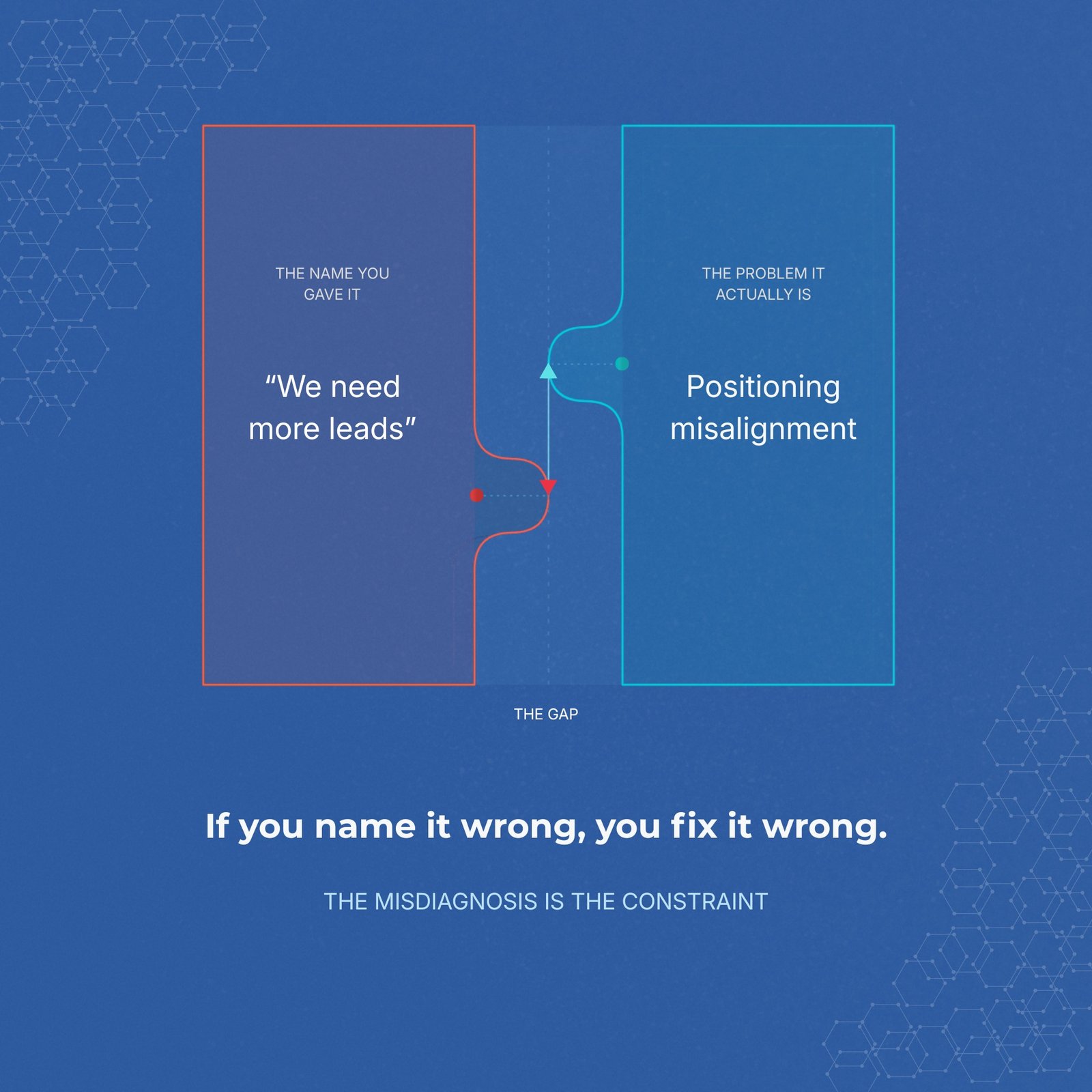
Here is the structural truth that most marketing cost conversations you come across, avoid — The most common reason marketing spend fails to produce proportional revenue is not insufficient budget. It is timing misalignment — deploying acquisition spend before the conversion pathway is ready to receive it.
Paid media generates attention, and you got to keep in mind that that attention has a short half-life. If the pathway from first contact to purchase decision is absent, unclear, or broken — if there is no coherent trust formation sequence between the moment someone discovers you and the moment they are ready to buy — then increasing media spend increases waste in direct proportion. Here your pipeline risks leaking faster the harder you push through it.
Before scaling any acquisition spend, here are three structural elements you must make functional and measurable:
- A mapped pathway from attention to conversion — not assumed, not approximate, specifically mapped
- Measurement at each stage of that pathway, not only at the terminal transaction
- Qualification logic that distinguishes active buyers from passive browsers
Spending without this structure in place is not a marketing cost problem, it is a system design problem where more budget will not resolve it – A proper diagnostic will.
What This Means for the Decision In Front of You
Marketing cost is not a spending decision, it is an allocation decision — and allocation decisions require a clear map of what the money is entering. So here is the correct sequence for your ready reference:
- First: Establish your baseline, know what is your current cost per acquisition — which channels produce it for you — what is the conversion rate at each stage?
- Second: Identify the constraint, diagnose where in the sequence from attention to close is the primary break — that is where the structural problem lives.
- Third: Size the budget against the constraint — not against an industry average, not against what a competitor appears to be spending.
- Fourth: Select the pricing model that aligns incentives correctly for your stage and scope.
- Fifth: Build in review gates, fix the quarterly minimum, as marketing cost that cannot be interrogated on a regular schedule becomes structural waste over time.
What You Do Not Need
You do not need to spend at the industry average to outperform it, budget efficiency is a structural variable, but budget size is not. And you do not need a full-service agency before you understand your constraint, as diagnosis precedes execution. Any agency recommending execution before that diagnosis is optimizing for their revenue, not yours.
You do not need to commit to a long-term retainer before a clear output framework is established, and a retainer without defined deliverables is an expense, not an investment.
A Note on How to Use This Information
The numbers in this analysis are reference points, not prescriptions, and they are most useful as a diagnostic baseline. Use them in a way of identifying where your current marketing cost structure diverges from market norms in ways that warrant investigation.
If your marketing cost is high and your returns are proportional, the structure is working. But if your marketing cost is high and the relationship between spend and revenue is unclear, the structure has a fault. The best part is, the fault is findable. It is usually in one of three places: the pathway design, the measurement system, or the timing sequence between spend and readiness — None of those require more budget to fix.
All figures reflect 2025 published market data. Sources: Gartner 2025 CMO Spend Survey (402 CMOs), The CMO Survey 34th Edition (11,000+ marketing executives), SE Ranking 2025 Agency Pricing Survey (260 agencies). Rates vary by geography, agency scale, scope complexity, and sector.