

How Do Buyers Evaluate and Differentiate Precision Manufacturing Companies?
Three precision manufacturing companies can look remarkably similar on paper. All may offer CNC machining, tight tolerances, inspection systems, quality certifications and experience in demanding industries. Yet your procurement or engineering buyer still has to decide: Which supplier represents the lowest practical risk?
That is where differentiation becomes more complicated than a capability list.
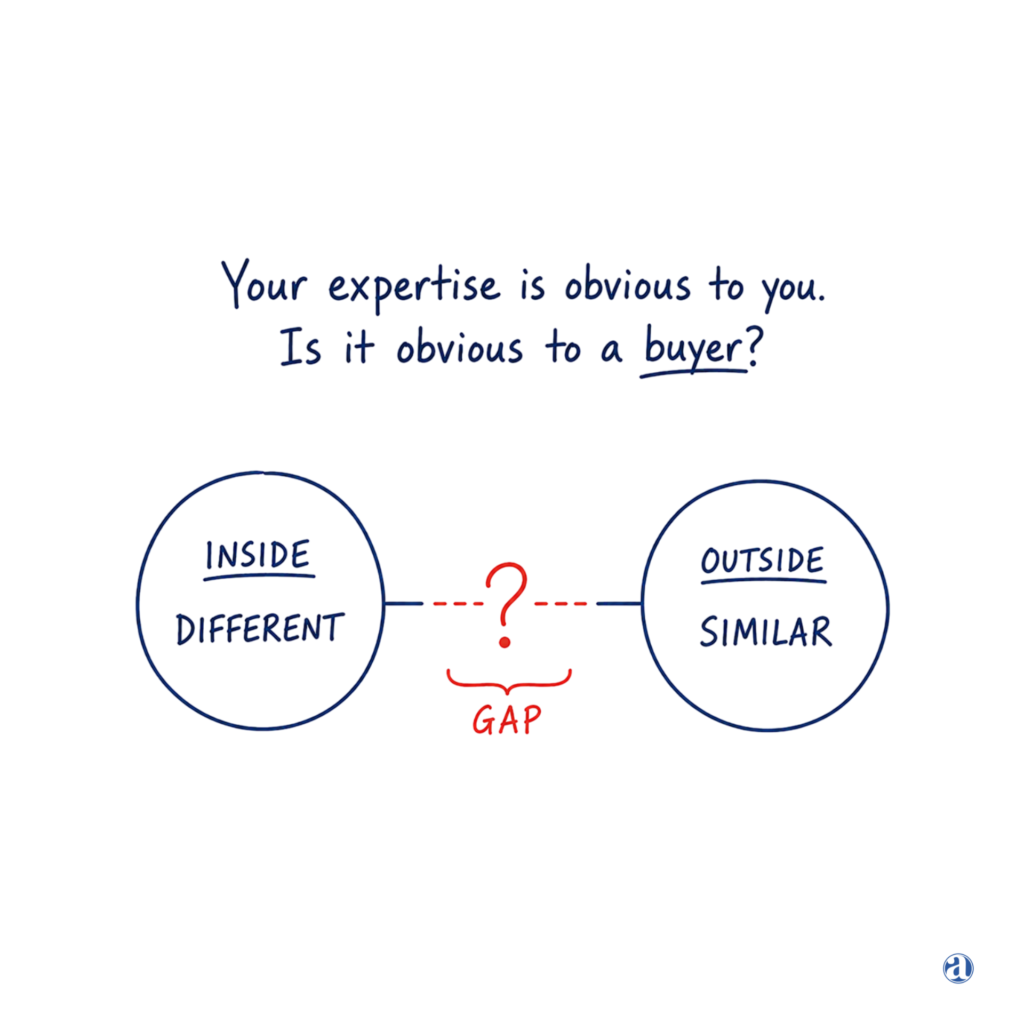
Buyers are not only evaluating capability.
For a precision manufacturing supplier, technical capability matters. Depending on the application, your buyers may examine:
- CNC and multi-axis capabilities
- Material expertise
- Tolerance capability
- Metrology and inspection
- Quality-management systems
- Traceability
- Relevant industry experience
- Production and delivery reliability
Quality certifications can provide important evidence, but there is a problem: Many technically capable suppliers can present similar evidence.
The real buyer question is risk.
A buyer selecting a precision machining or precision manufacturing company is not simply asking: “Can they make this component?” They are also trying to reduce uncertainty.
- Can this supplier consistently hold the required specification?
- Can they manage difficult materials or complex geometries?
- Can they demonstrate how quality is controlled?
- Can they provide credible evidence from comparable work?
- Can I understand their technical strengths without having to extract everything through a sales conversation?
The buyer is evaluating confidence, not just capacity.
The Capability Trap
Consider two suppliers, Supplier A says:
- 5-axis machining.
- ISO certified.
- Advanced inspection.
- Aerospace experience.
Supplier B provides similar capabilities—but makes its relevant engineering experience, difficult applications, quality evidence and problem-solving approach easier to understand.
Supplier B may not actually be more capable, but it may be easier for a new buyer to evaluate. That distinction matters.
Capability is internal. Authority is what the buyer can evaluate.
Capability exists in the machines, engineers, processes, accumulated experience and decisions made on the shop floor. Authority exists in the evidence, explanations, examples and signals available before the buyer speaks to your team. The gap between the two can be significant.
What makes a precision manufacturer easier to trust?
The strongest differentiation is rarely another generic claim about being “high quality”. It is evidence that helps a buyer understand why the capability matters.
For example:
Instead of: “We provide precision CNC machining.” A buyer may need to understand: What kinds of difficult machining problems does the company repeatedly solve?
Instead of: “We have advanced quality systems.” A buyer may need to understand: How does that quality discipline translate into confidence around critical components?
Instead of: “We serve aerospace and defense.” A buyer may need to understand: What relevant experience demonstrates that the supplier understands the demands of those applications?
The objective is not to reveal every process detail publicly, it is to make genuine expertise legible to someone who does not already know the business.
India’s precision-manufacturing opportunity makes this more important
India’s manufacturing ecosystem is moving into increasingly demanding engineering territory.
A recent example is the July 2026 development of India’s first indigenous 350 kg-thrust expendable turbojet engine. The Press Information Bureau1 reported that DRDO’s GTRE worked with Hyderabad-based Azad Engineering on manufacturing and assembly, describing the achievement as involving precision engineering, advanced manufacturing and sophisticated engineering requirements.
The significance for precision manufacturers is not simply that India’s technical capability is expanding. It is that the ability to demonstrate specialized capability becomes increasingly important as suppliers move into more demanding applications and supply chains.
The 0-question test
Here is a useful thought experiment for any precision manufacturing company: If a new buyer could not ask your sales or engineering team a single question, what would they understand about your real expertise?
Not what your team knows internally, not what existing customers already know, What can an unfamiliar buyer actually discover, understand and evaluate? That is the important distinction.
So how do buyers differentiate precision manufacturing companies?
A useful starting model is:
- Discover: Can I find the relevant expertise? ↓
- Understand: Do I understand what this supplier is genuinely good at? ↓
- Trust: Do I have enough evidence to take the supplier seriously? ↓
- Validate: Can I verify the capability through relevant proof? ↓
- Choose: Do I have enough confidence to move forward?
The important question for a manufacturer is not whether these ingredients exist somewhere inside the business. It is whether a new buyer can recognise them before the conversation begins. And that leads to a more uncomfortable question:
Is your market seeing the full strength of your manufacturing expertise—or only the part that fits on a capability sheet?
The Authority Gap
This is one form of an authority gap: the distance between what a business is genuinely capable of and what a new buyer can confidently recognize.
The gap is different for every business, understanding where it exists is a separate question.