
Online Marketing Services:
How to Know Whether They’re the Right Investment for Your Business
Businesses rarely start searching for online marketing services because they’re interested in marketing itself. They search because qualified buyers are becoming harder to attract, enquiries have slowed, competitors appear easier to choose, or marketing investments no longer create the confidence they once did.
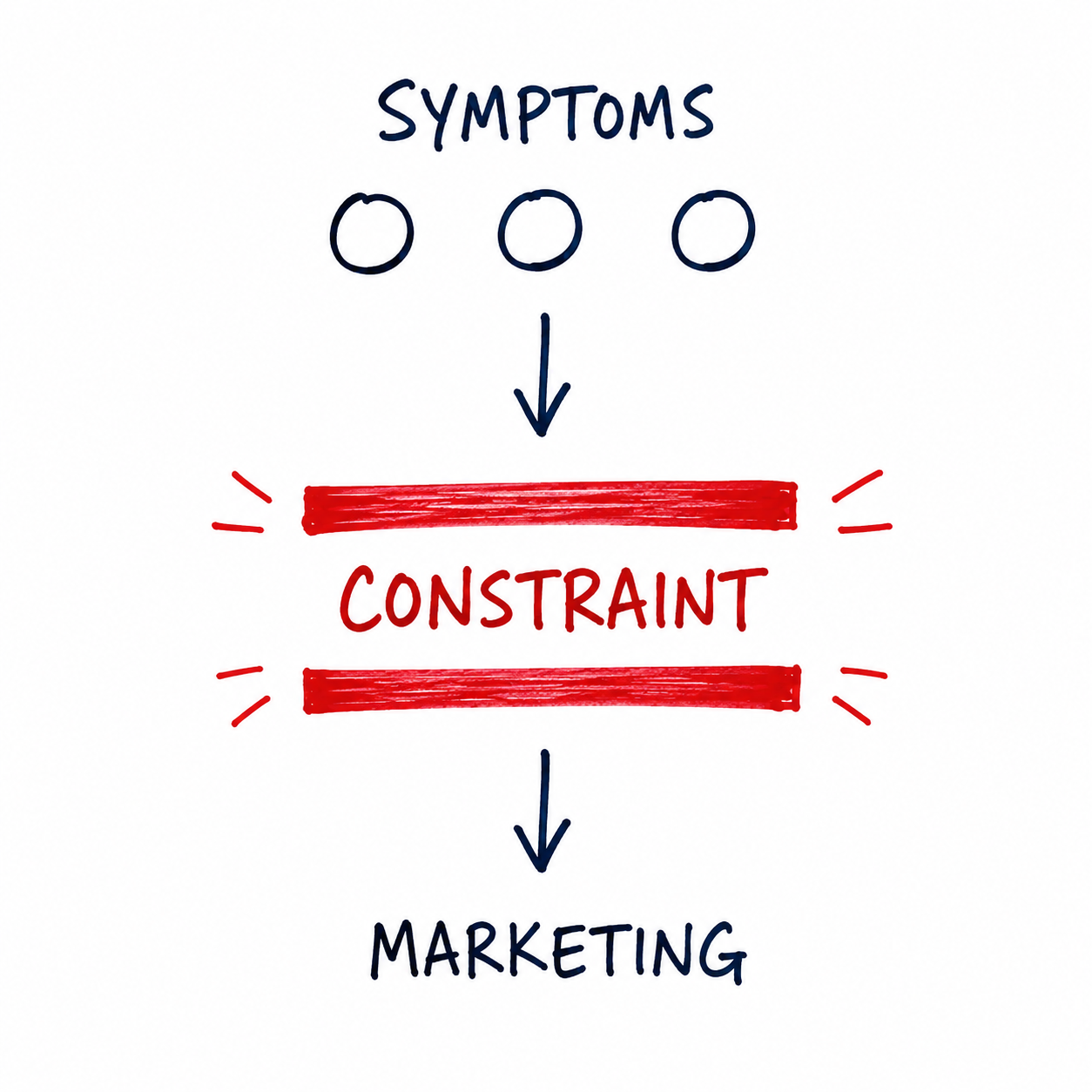
Marketing can increase attention. Digital authority determines whether that attention becomes buyer confidence.
Business growth challenges often look like marketing problems. In reality, they frequently reveal something deeper: a gap between the expertise a business possesses and how easily buyers can discover, understand, trust, and evaluate that expertise.
What Are Online Marketing Services?
Online marketing services are professional services that help businesses improve their discoverability, buyer engagement, customer acquisition, and long-term market visibility through digital channels such as search engines, paid advertising, content marketing, social media, email, and websites.
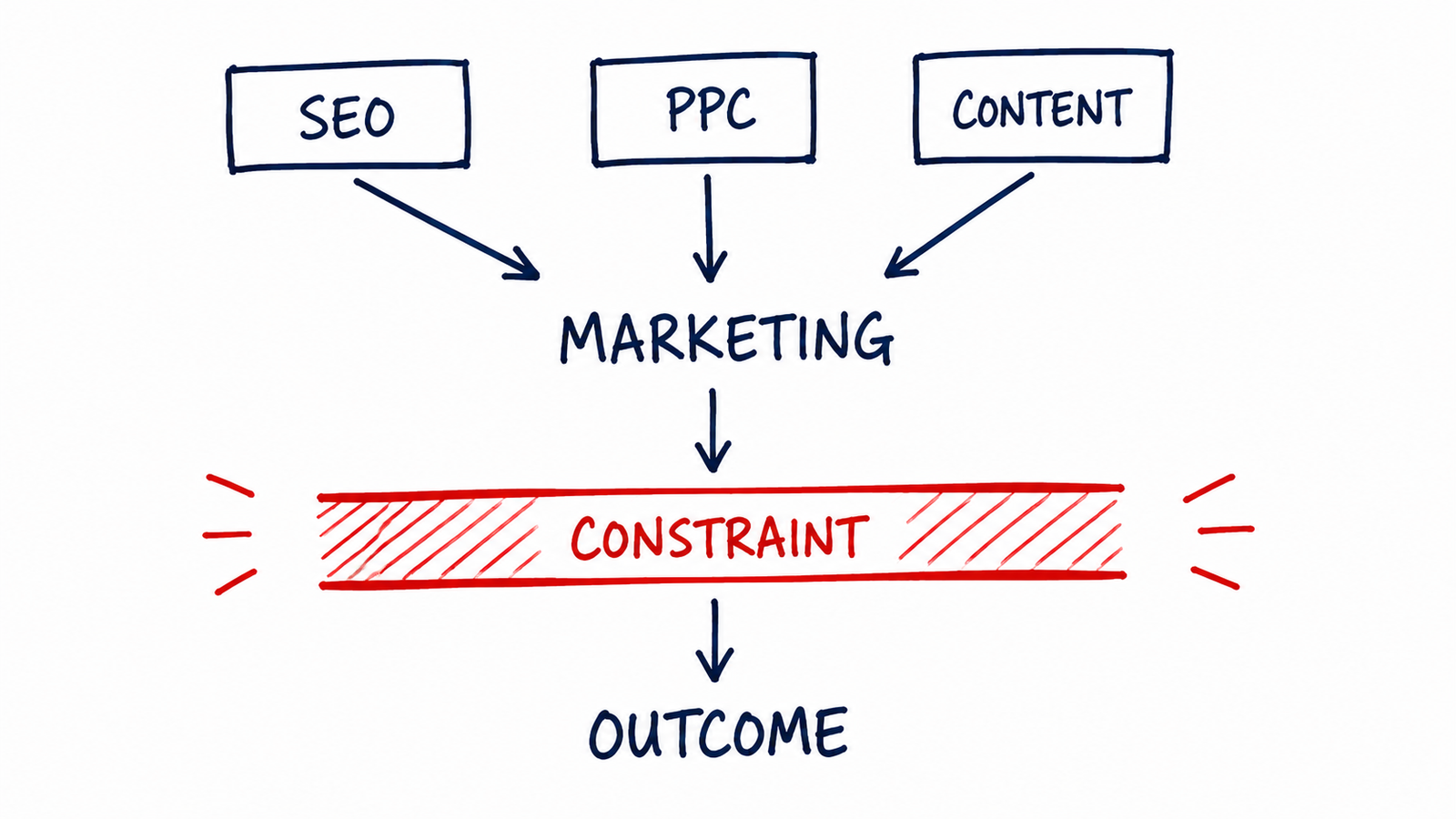
Depending on where buyers experience friction in their journey, businesses typically invest in one or more of the following:
- Search Engine Optimization (SEO)
Improving a website’s visibility in search engines so qualified buyers can discover products and services organically.
- Pay-Per-Click Advertising (PPC)
Running paid campaigns through platforms such as Google Ads and LinkedIn Ads to generate targeted traffic and enquiries.
- Content Marketing
Publishing articles, guides, videos, and other educational resources that help buyers understand problems, evaluate solutions, and build confidence.
- Social Media Marketing
Creating consistent visibility and engagement across platforms where customers spend time researching businesses.
- Email Marketing
Maintaining relationships with prospects and customers through personalized communication and nurturing campaigns.
- Website Optimization
Improving usability, messaging, trust signals, and conversion paths so visitors are more likely to become enquiries.
Every one of these services has a legitimate role, and the mistake isn’t investing in marketing. The mistake is assuming every marketing service solves every growth problem. Every marketing channel serves a different purpose. Its effectiveness depends less on the channel itself and more on whether it helps buyers discover, understand, trust, validate, or confidently choose your expertise. Marketing creates visibility while authority determines whether visibility becomes preference.
Why Businesses Mistake Authority Gaps for Marketing Problems
Very few founders begin their day thinking, “We should invest in SEO.” They begin by noticing that business performance has changed.
The symptoms vary from business to business, and common examples include:
- Website traffic has plateaued.
- Qualified enquiries have declined.
- Sales have become inconsistent.
- Competitors appear more visible online.
- Marketing costs continue to rise.
- Referral enquiries are slowing.
These observations are valid, what they don’t reveal is why those symptoms exist.
A manufacturing business struggling to reach new export markets may genuinely have a Discovery Gap.
An architecture practice may already receive sufficient traffic but experience an Understanding Gap or Trust Gap before prospects enquire.
A healthcare provider may attract enquiries but lose patients because the digital experience creates a Trust Gap during an already sensitive buying decision.
Each business experiences similar symptoms, yet each is limited by a different Digital Authority Gap. Until that gap is understood, additional marketing often improves activity more than buyer confidence.
The Counterintuitive Reality Most Businesses Discover Too Late
One of the most expensive decisions a business can make is treating every marketing symptom as a marketing problem. Sometimes marketing is the right answer, but often, it isn’t.
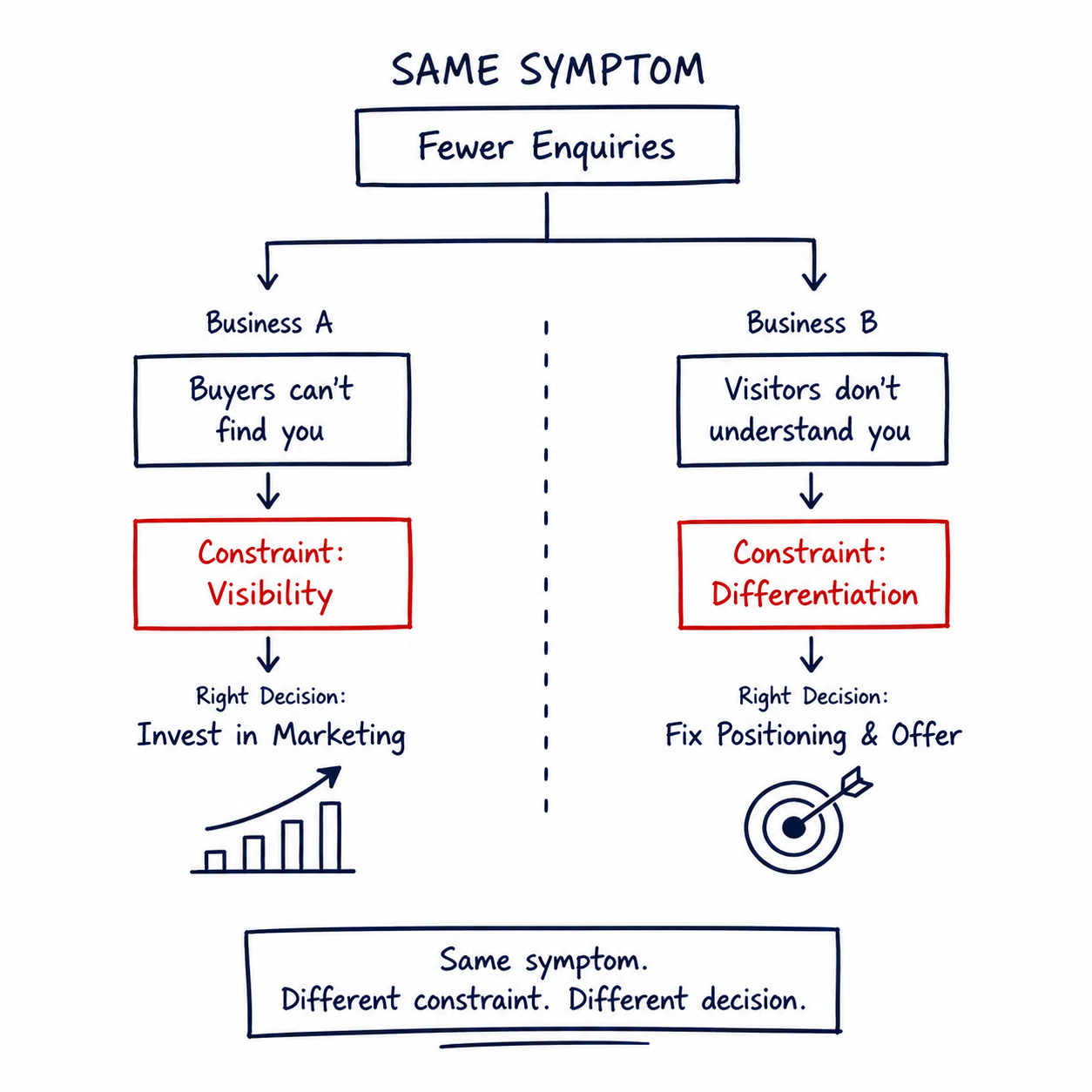
Consider two businesses experiencing the same symptom: both generate fewer enquiries than expected.
The first business has a strong reputation, a clear offer, and an effective sales process. Its buyers simply cannot discover the business online. Investing in the right digital marketing activities is likely to produce measurable results.
The second business already receives consistent website traffic. Visitors leave because they struggle to understand what makes the business different from its competitors. Increasing traffic simply creates more visitors who leave for exactly the same reason.
The visible symptom appears identical, the underlying Digital Authority Gap is completely different. This is why businesses with similar marketing symptoms frequently require different business decisions.
The same marketing symptom can require two completely different business decisions.
When Marketing Amplifies Existing Digital Authority
Marketing initiatives become highly effective when they support a business that already has a strong Digital Authority foundation. For example, marketing investment is often justified when:
- Your buyers already understand why your expertise is relevant, but new buyers rarely discover your business.
- Your buyers already understand your expertise, but a Discovery Gap remains the primary limitation.
- Your sales process consistently converts enquiries into customers, yet lead generation has become the limiting factor.
- You have established credibility within your industry but need greater reach into new markets or customer segments.
In these situations, services such as SEO, paid advertising, content marketing, and conversion optimization can amplify an already healthy Digital Authority system. Marketing is no longer compensating for structural weaknesses, it is accelerating an existing advantage.
Marketing amplifies existing Digital Authority. It rarely creates authority on its own.
When More Marketing May Not Be the Right Answer
Marketing creates attention, but it creates meaningful business value only when buyers can confidently evaluate the expertise behind that attention.
If buyers cannot understand your expertise, additional traffic rarely improves conversion.
If buyers cannot validate your capability, more advertising increases awareness without increasing confidence.
If buyers struggle to distinguish you from comparable alternatives, additional enquiries rarely improve commercial outcomes.
If your follow-up process lacks consistency, generating more enquiries simply increases the number of missed opportunities.
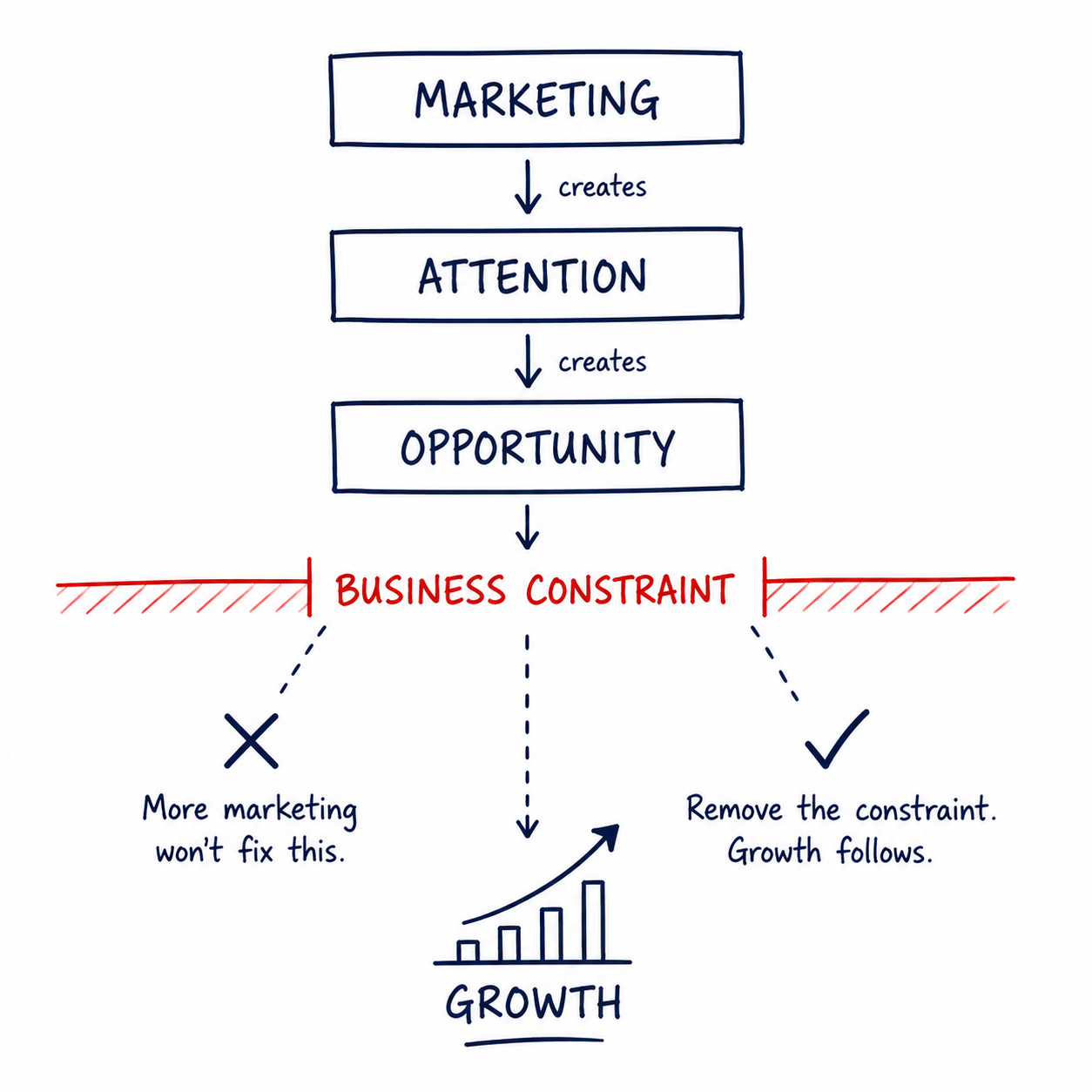
The objective isn’t more marketing, it is removing the constraint preventing buyers from confidently progressing. Marketing should support that objective—not replace it.
Marketing Works Best After Authority Gaps Are Understood
Online marketing services remain some of the most effective tools for increasing discoverability and buyer engagement. Their impact depends on whether they strengthen the aspect of Digital Authority that currently limits buyer confidence.
Founders often ask: “Which marketing service should we invest in next?”
A more useful question is: “What evidence tells us marketing is actually the primary Digital Authority Gap limiting buyer confidence?”
That shift in thinking changes every decision that follows. And when the underlying authority gap is understood, marketing becomes more focused, investment becomes more accountable, and every activity is more likely to strengthen market recognition and buyer confidence rather than simply increasing marketing activity.
Before You Invest in Marketing, Ask These Questions
Selecting an online marketing partner shouldn’t begin with comparing service packages or pricing. It should begin with understanding how they think. A strategic authority partner should be able to explain why they recommend a particular approach—not simply what they recommend. Before making a decision, consider asking:
An experienced advisor should investigate your buyer journey before recommending SEO, paid advertising, or social media campaigns.
Recommendations should be based on observable buyer behavior, commercial objectives, and observable Digital Authority Gaps—not assumptions.
Not every part of your marketing needs improvement. Understanding what is already working is just as important as identifying what isn’t.
Beyond impressions, clicks, and traffic, ask how marketing success will contribute to qualified enquiries, sales conversations, buyer confidence, qualified conversations, and market recognition.
Businesses rarely have unlimited budgets. A clear prioritization process helps ensure every investment supports the business’s most important commercial objective.
How We Think About Digital Authority
Many marketing providers begin by selecting channels: SEO, PPC, social media, and content — We begin by understanding how buyers evaluate expertise.
Instead of asking which marketing channel to prioritize, we first identify where buyer confidence is breaking down. That usually means understanding whether buyers struggle to discover, understand, trust, validate, differentiate, or confidently choose the business. Only then do we decide whether SEO, content, websites, paid advertising, messaging, or other initiatives deserve priority.
Google’s Search documentation explains how search visibility is evaluated.
Marketing should strengthen Digital Authority—not attempt to replace it.
Frequently Asked Questions About Marketing Investments
Online marketing efforts are professional activities that help businesses attract, engage, and convert customers through digital channels. They commonly include SEO, PPC advertising, content marketing, social media marketing, email marketing, website optimization, and analytics.
Yes—provided they address the business’s primary Digital Authority Gap. For many small businesses, improving online visibility can generate qualified enquiries and sustainable growth. However, if the underlying issue relates to understanding, trust, proof, differentiation, or the sales process, marketing alone may not produce the expected commercial outcomes.
The terms are generally used interchangeably, and both refer to marketing activities delivered through digital channels such as search engines, websites, email, social media, online advertising, and digital content.
There is no universal answer, as the appropriate investment depends on what is limiting buyer confidence. A business with low visibility may benefit from SEO or paid advertising. While a business with strong visibility but weak enquiries may need improvements in messaging, trust, or conversion before increasing marketing activity.
The timeframe varies depending on the service; like paid advertising can generate visibility relatively quickly, while SEO and content marketing often require several months to build sustainable momentum. The more important consideration is whether marketing is solving the right Digital Authority Gap.
Start by understanding how buyers currently discover, evaluate, and choose your business. Different marketing channels solve different problems, so choosing the right channel becomes much easier once the primary Digital Authority Gap has been identified.
How to Decide Whether Marketing Is Actually the Constraint
| If… | Likely Digital Authority Gap |
|---|---|
| Buyers can’t find you | Discovery Gap |
| Buyers don’t understand your expertise | Understanding Gap |
| Buyers hesitate before contacting you | Trust Gap |
| Buyers ask for repeated reassurance | Proof Gap |
| Buyers compare mainly on price | Differentiation Gap |
| Buyers disappear before deciding | Decision Gap |
Key Takeaways
- Online marketing services increase discoverability; Digital Authority increases buyer confidence.
- Similar marketing symptoms often reveal different Digital Authority Gaps.
- Buyers choose businesses they can discover, understand, trust, validate, and confidently evaluate.
- Marketing creates stronger returns when it strengthens Digital Authority rather than compensating for missing authority.
- Better marketing decisions begin with identifying the Digital Authority Gap before selecting marketing channels.
The quality of your marketing decisions matters more than the quantity of your marketing activities.
Before You Invest More in Marketing
Every business eventually reaches a point where growth slows, enquiries fluctuate, or marketing results become inconsistent. The instinctive response is often to increase activity, but sometimes that’s exactly the right decision, and sometimes it isn’t. The difference lies in understanding why your business is producing its current results before deciding what should change.
If you’re still uncertain where buyers are dropping out of your marketing, sales, or customer journey, begin with the 7-Min Self Audit. If you’ve already identified recurring symptoms and want to confirm the primary Digital Authority Gap before making further marketing investments, explore the Strategic Diagnosis.
Better marketing decisions rarely begin with choosing another marketing activity or service, they begin by understanding what your business actually needs next.
Diagnosis should determine marketing—not the other way around.