

The Hidden $0.2M–$4.1M Leak
A structural diagnostic of Thermo Fischer Scientific built on public data signals and high-intent benchmarks.
Request Full Access
Shared selectively with business leaders in industrial marketplaces.
𝗧𝗵𝗲 𝗛𝗶𝗱𝗱𝗲𝗻 $𝟬.𝟮𝗠–$𝟰.𝟭𝗠 𝗥𝗲𝘃𝗲𝗻𝘂𝗲 𝗟𝗲𝗮𝗸 𝗶𝗻 𝗮 𝗣𝗲𝗿𝗳𝗲𝗰𝘁-𝗟𝗼𝗼𝗸𝗶𝗻𝗴 𝗦𝘆𝘀𝘁𝗲𝗺
In B2B life sciences, one assumption quietly drives most growth strategies:
𝗜𝗳 𝗲𝗱𝘂𝗰𝗮𝘁𝗶𝗼𝗻𝗮𝗹 𝗰𝗼𝗻𝘁𝗲𝗻𝘁 𝗶𝘀 𝗽𝗲𝗿𝗳𝗼𝗿𝗺𝗶𝗻𝗴, 𝗱𝗲𝗺𝗮𝗻𝗱 𝗶𝘀 𝗯𝗲𝗶𝗻𝗴 𝗰𝗮𝗽𝘁𝘂𝗿𝗲𝗱.
Your SEO can be flawless.
Traffic can be climbing.
Engagement can look strong.
And yet—millions in revenue can quietly leak from the system.
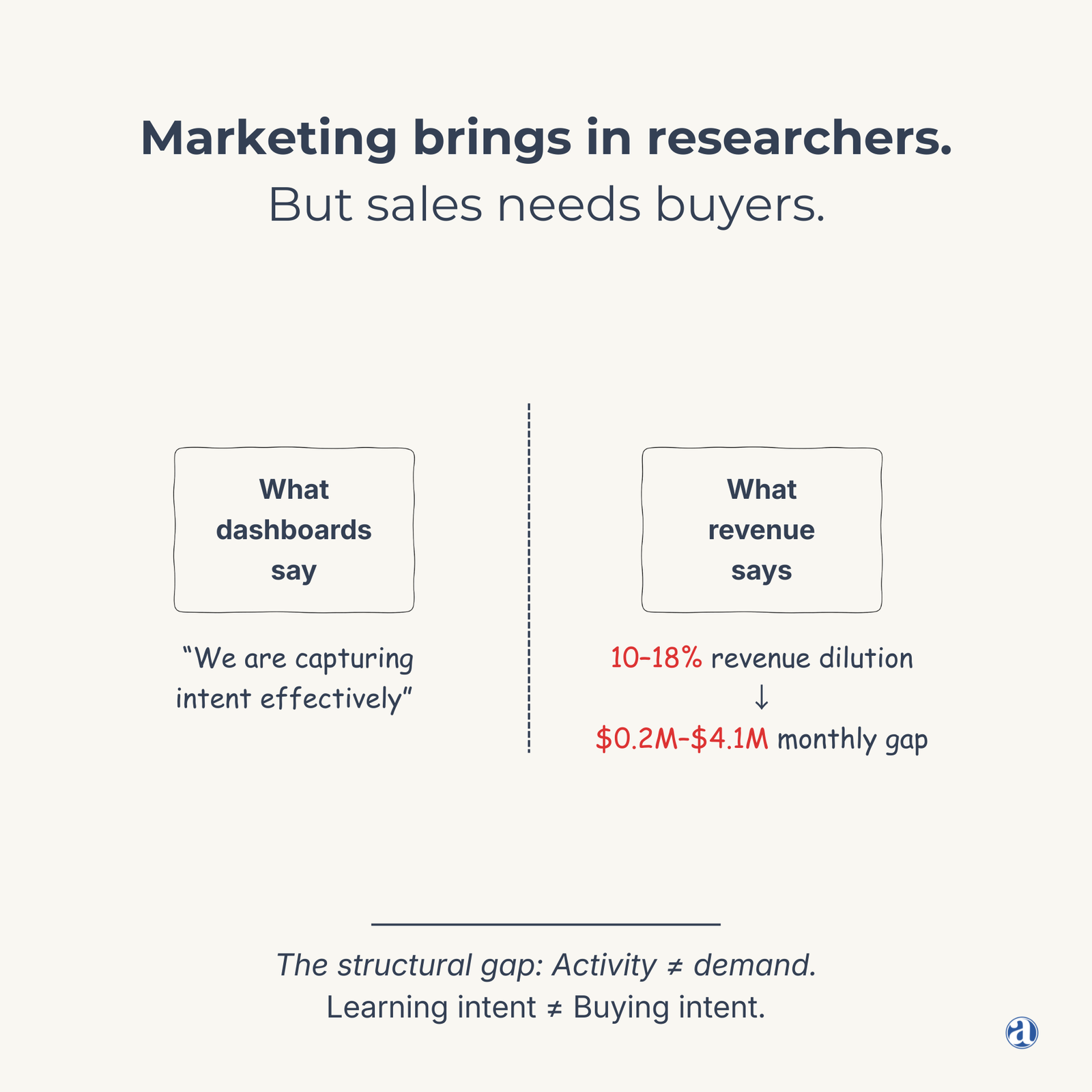
𝗣𝘂𝗯𝗹𝗶𝗰 𝘀𝗶𝗴𝗻𝗮𝗹𝘀 from Thermo Fisher Scientific suggest a potential $𝟬.𝟮𝗠–$𝟰.𝟭𝗠 𝗺𝗼𝗻𝘁𝗵𝗹𝘆 𝗴𝗮𝗽—though the same pattern is visible across other major players in life sciences.
Not because of poor execution in ads or sales—
but because of something earlier:
𝗗𝗲𝗺𝗮𝗻𝗱 𝗶𝘀 𝗯𝗲𝗶𝗻𝗴 𝗺𝗶𝘀𝗰𝗹𝗮𝘀𝘀𝗶𝗳𝗶𝗲𝗱.
Here’s the trap most teams don’t see:
- Organic traffic grows
- Protocol pages perform
- Engagement metrics look great
So the conclusion feels obvious:
“𝘞𝘦’𝘳𝘦 𝘤𝘢𝘱𝘵𝘶𝘳𝘪𝘯𝘨 𝘥𝘦𝘮𝘢𝘯𝘥 𝘦𝘧𝘧𝘦𝘤𝘵𝘪𝘷𝘦𝘭𝘺.”
But here’s what’s actually happening:
They’re capturing 𝗿𝗲𝘀𝗲𝗮𝗿𝗰𝗵𝗲𝗿𝘀 looking for instructions—𝗻𝗼𝘁 𝗯𝘂𝘆𝗲𝗿𝘀.
Users searching for “ELISA procedure steps” or “Cell counting methods” express 𝗹𝗲𝗮𝗿𝗻𝗶𝗻𝗴 𝗶𝗻𝘁𝗲𝗻𝘁, not 𝗯𝘂𝘆𝗶𝗻𝗴 𝗶𝗻𝘁𝗲𝗻𝘁—and both are being treated the same.
That’s the structural failure: Learning behavior is being counted as commercial demand.
The result?
Top-of-funnel activity expands, authority signals rise, but commercial progression plateaus. At scale, this misclassification potentially dilutes revenue by 𝟭𝟬–𝟭𝟴%.
The uncomfortable truth: 💡 𝗔𝗰𝘁𝗶𝘃𝗶𝘁𝘆 ≠ 𝗱𝗲𝗺𝗮𝗻𝗱.
The question most dashboards don’t answer:
Is your organic acquisition system optimized for participation—or for purchase?
💡 This is the blind spot most teams miss—because every metric looks correct in isolation.
We’ve documented the full diagnostic – available on request.